What Developers in Kelowna Can Learn From Vancouver’s Condo Overhang
What Kind of Housing Does Kelowna Need Developers to Build?
Kelowna needs more housing, but not just more doors.
The real need is housing that matches real people: downsizers, young families, move-up buyers, renters, workers, and people who are moving to Kelowna for the Okanagan lifestyle.
That means Kelowna developers should be careful about building product that is too small, too expensive, or aimed only at investors.
Vancouver’s condo overhang is a warning sign. When the product does not fit the buyer, the market can push back.
Vancouver’s Condo Overhang Is a Product-Market Fit Lesson
CMHC reported that Vancouver had the highest unsold condominium inventory at completion among major Canadian markets, and also warned that when completed units do not sell, lenders may restrict credit and developers may delay or cancel future projects.
That matters for multifamily Kelowna projects.
It shows one simple truth:
Just because a city needs housing does not mean every housing product will sell.
The Problem Was Not Just Supply
Vancouver did not suddenly stop needing homes.
The issue is that some product became hard for real buyers to absorb.
Small investor-style condos can work when money is cheap, rents are rising fast, and investors believe prices will keep climbing. But when rates rise, costs stay high, and buyers become careful, that product can stall.
That is the part Kelowna developers should pay attention to.
Kelowna Is Not Vancouver, But Kelowna Can Still Learn From It
Kelowna has its own demand drivers.
People are still drawn to Living in Kelowna because of the lake, trails, wineries, schools, recreation, and slower pace compared with larger cities.
But Living in Kelowna is also getting more expensive.
So the winning projects will likely be the ones that solve a real local problem, not just the ones that look good on a spreadsheet.
👉 See the latest homes for sale in Kelowna here
Kelowna Still Has Real Housing Need
The City of Kelowna’s Interim Housing Needs Report estimated a need for 13,863 additional units over five years and 44,571 over twenty years.
The City has also noted Kelowna may need about 45,000 new housing units between 2021 and 2041 to meet population growth and existing unmet need.
So yes, Kelowna needs housing.
But the better question is:
What type of housing does Kelowna actually need?
Kelowna Developers Should Not Confuse Unit Count With Demand
A building can add housing and still miss the market.
That is the lesson from Vancouver.
If the units are too small for families, too expensive for local incomes, or too investor-focused, the market can say no.
For Kelowna real estate, the goal should not only be density.
The goal should be useful density.
What Kind of Housing Does Kelowna Need Developers to Build?
Kelowna needs more housing that fits real life.
That includes:
- Family-sized townhomes
- Ground-oriented multifamily homes
- Lock-and-leave downsizer homes
- Infill housing Kelowna buyers can actually live in
- Purpose-built rentals close to jobs, transit, and services
- Homes with storage, parking, outdoor space, and flexible layouts
CMHC has also pointed out that missing middle housing gives families more options when detached homes are too expensive and high-rise units are too small.
That is a huge point for Living in Kelowna.
1. Family-Sized Missing Middle Housing
A young family may not need a 4,000 sq. ft. home.
But they often do need:
- 3 bedrooms
- 2 bathrooms
- Storage
- Parking
- A small yard or patio
- Space for kids, pets, bikes, and gear
This is where infill housing Kelowna can shine.
Not every project needs to be a tower. Some of the most useful housing can come from townhomes, fourplexes, sixplexes, stacked townhomes, and small multifamily projects in the right locations.
2. Downsizer-Friendly Homes
Downsizers are one of the most important groups in Kelowna real estate.
Many own larger homes but want less maintenance. They may want to stay near friends, doctors, shopping, golf, the lake, and family.
But many do not want a tiny condo with no storage.
A better downsizer product might include:
- One-level living
- Elevator access
- Secure parking
- Storage
- Larger primary bedroom
- Outdoor space
- Room for guests or grandkids
This is a big part of Living in Kelowna that developers should not ignore.
3. Move-Up Housing for Young Families
A lot of people looking at Kelowna homes for sale are not first-time buyers.
They already own something.
They may be in a condo, townhouse, or smaller home, and they want to move up.
But if the gap between their current home and the next step is too large, they freeze.
That is why multifamily Kelowna projects need to think about the middle of the market, not just entry-level or luxury.
📥 Download our free Kelowna Home Buyer’s Guide today.
4. Rental Housing Built for Local Workers
Rental housing matters too.
But again, product fit matters.
A rental building made only of small units may help some people, but it may not help families, essential workers, or people who need to stay in Kelowna long term.
Good rental product should consider:
- Bedroom mix
- Monthly affordability
- Pet-friendly policies
- Parking needs
- Proximity to work
- Transit access
- Grocery access
If Living in Kelowna is going to work for more people, rental housing has to be livable, not just countable.
The Kelowna Product-Market Fit Checklist
Before launching a project, Kelowna developers should ask a few basic questions.
Who Is the End Buyer?
Is this for:
- A local downsizer?
- A young family?
- A first-time buyer?
- A renter?
- A student?
- A second-home buyer?
- An investor?
If the answer is “everyone,” the product may not be clear enough.
Is the Unit Actually Livable?
A floor plan can look efficient on paper but feel tight in real life.
Ask:
- Where does the stroller go?
- Where do the skis go?
- Where does the dog sleep?
- Where do guests stay?
- Can someone work from home?
This matters for Living in Kelowna, because the lifestyle often comes with bikes, paddleboards, golf clubs, pets, kids, and outdoor gear.
Is the Price Connected to Local Income?
This is where the market gets honest.
If a project only works for outside investors or high-income buyers, that may be a thinner pool than expected.
The City says Kelowna has a five-year housing target of 8,774 net new completed housing units, but targets do not automatically guarantee buyer demand at every price point.
Is the Location Strong Enough?
Location still matters.
Downtown Kelowna, Pandosy, Glenmore, Rutland, Lower Mission, and Kelowna South all have different buyer profiles.
West Kelowna and Lake Country also have different demand patterns, price points, and lifestyle pulls.
A product that works in one area may not work in another.
Why Investor-Only Product Is Risky
Investor demand can be helpful.
But it can also disappear quickly.
When rates rise, rents soften, financing tightens, or appreciation slows, investors can step back.
That is why Kelowna developers should be careful about building only for investors.
A stronger project is one that can appeal to both investors and real end users.
The best question is:
Would someone want to live here even if prices did not go up next year?
If the answer is yes, the project is probably stronger.
Infill Housing Kelowna Buyers May Actually Want
The opportunity in infill housing Kelowna is not just density.
It is better use of land in areas where people already want to live.
Good infill can create:
- More homes near schools
- More homes near transit
- More homes near parks
- More homes near shops
- More options for downsizers and families
But bad infill can feel squeezed, overpriced, and disconnected from the neighbourhood.
The difference is design.
Multifamily Kelowna Projects Need More Than a Pretty Rendering
Renderings sell the dream.
But buyers live in the details.
For multifamily Kelowna projects, the details matter:
- Natural light
- Storage
- Outdoor space
- Noise control
- Parking
- Floor plan flow
- Bedroom size
- Monthly strata fees
- Walkability
- Long-term maintenance costs
A buyer may fall in love with a picture, but they write the offer based on value.
📩 Subscribe to our weekly email update for listings and market insights.
West Kelowna and Lake Country Should Be Watched Closely
This is not just a Kelowna city issue.
West Kelowna has a Housing Accelerator Fund target of 1,343 housing units by 2028, including 814 missing middle units and 330 multi-units.
That tells us missing middle is not a side story.
It is becoming a major part of the regional housing conversation.
Lake Country also continues to attract buyers who want more space, views, and access to the Okanagan lifestyle, while still staying close to Kelowna.
For anyone moving to Kelowna, the search often becomes regional very quickly.
What Buyers Can Learn From This
Buyers should not assume every new condo or townhome is a good buy.
Look at:
- Price per square foot
- Monthly costs
- Floor plan
- Rental rules
- Resale competition
- Future supply nearby
- Who the next buyer will be
A good home should work today and still make sense later.
That is true whether you are buying downtown, in West Kelowna, in Lake Country, or anywhere across the Central Okanagan.
What Sellers Can Learn From This
Sellers should watch new construction closely.
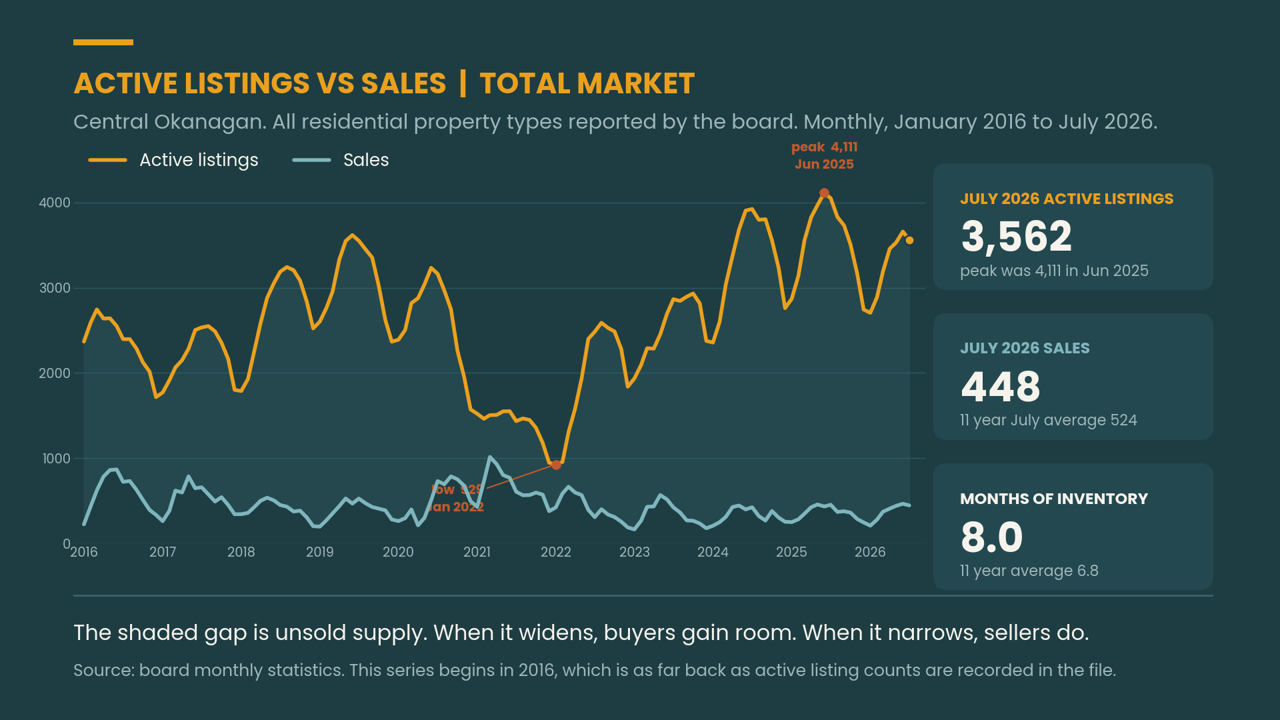
If new inventory sits, it can affect resale homes too.
But if your home offers what new product does not, you may have an advantage.
For example:
- Larger floor plan
- Bigger yard
- Better parking
- Suite potential
- Mature neighbourhood
- More storage
- No GST
- Move-in ready condition
That is why Kelowna homes for sale need smart positioning, not just a price and photos.
Final Takeaway for Kelowna Developers
The big lesson from Vancouver is not “do not build condos.”
The lesson is:
Build the right product for the right buyer at the right price.
Kelowna needs housing. But Living in Kelowna is not just about adding units. It is about building homes that people can actually use, afford, and stay in.
For Kelowna developers, infill housing Kelowna, and multifamily Kelowna projects, the opportunity is still real.
But the market is getting smarter.
Build for real people, not just spreadsheets.
Thinking About Buying, Selling, or Developing in Kelowna?
Whether you are looking at Kelowna real estate, comparing Kelowna homes for sale, planning a move to West Kelowna or Lake Country, or trying to understand the future of Living in Kelowna, we can help.
Mark Coons, BBA, CE
REALTOR® | eXp Realty Kelowna
Team Lead, Selling Okanagan Group
Relocated to Kelowna in 2018
📞 778-946-6454
📩 [email protected]