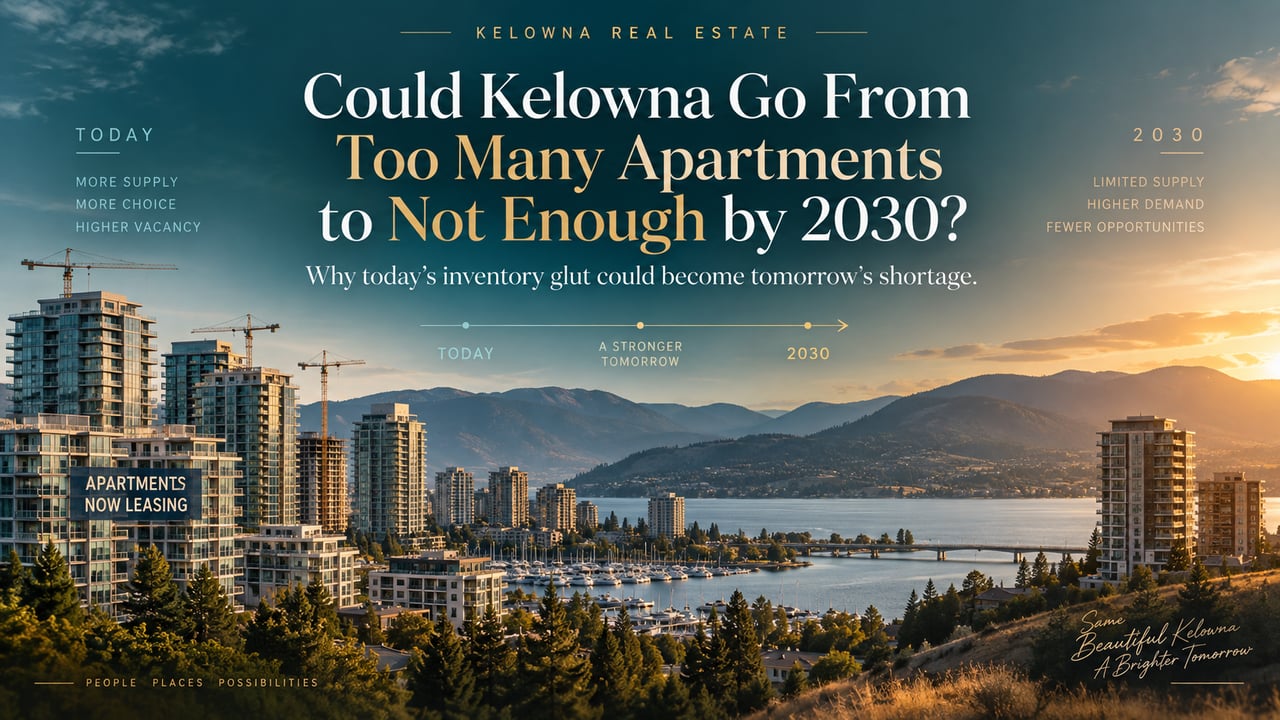
Could Kelowna Go From Too Many Apartments to Not Enough by 2030?
Right now, Kelowna has an apartment problem.
Just maybe not the one we are used to hearing about.
For years, the problem was not enough rental housing.
Today?
We may actually have too much.
Kelowna's purpose-built rental vacancy rate reached 6.4 per cent in 2025. In 2023, it was only 1.3 per cent. Newly completed rental buildings are competing for tenants, incentives have become more common, and some condo developers are still trying to move finished inventory.
So why would I even be talking about another shortage?
Because the apartments sitting empty today and the apartments we may need in 2030 are two completely different things.
And the number I am watching now is not vacancy.
It is construction starts.
Kelowna built a lot of apartments
The jump in vacancy did not happen by accident.
Kelowna spent years adding housing.
The City's 2024 annual report noted that more than 5,100 new homes received building permits in 2024, with apartments making up the majority. It also pointed out that purpose-built rental investment had reached historically high levels.
Those buildings did not show up overnight.
They were planned, approved, financed and started years before tenants eventually moved in.
Now many of them are arriving at roughly the same time.
And demand cooled at exactly the wrong time
While supply was arriving, demand softened.
Population and migration trends changed.
Affordability remained difficult.
Higher interest rates affected buyers and developers.
Changes to international migration also reduced one source of rental demand.
The result was predictable.
More apartments chasing fewer renters.
Vacancy went up.
That is good news for renters
We should not pretend higher vacancy is a bad thing.
For renters, more choice is generally good.
It gives tenants more negotiating power.
Landlords have to compete.
New buildings may offer incentives.
Rent growth can slow.
People who were stuck taking whatever apartment they could find suddenly have options.
After years of extremely tight rental conditions, some balance was needed.
But today's vacancy rate tells us about yesterday's construction decisions
This is the part I think gets missed.
When we look at a 6.4 per cent vacancy rate in 2026, we are mostly looking at the result of projects started years ago.
We are not looking at what will be available in 2029 or 2030.
That supply depends on projects getting started now.
And that number is moving in the opposite direction.
Kelowna housing starts are dropping
CMHC's numbers are worth watching here.
In 2025, Kelowna recorded about 2,600 total housing starts, down from roughly 3,790 the year before.
That was a decline of about 31 per cent.
The drop was concentrated heavily in multi-unit housing. Multi-unit starts fell from roughly 3,429 in 2024 to 2,338 in 2025, a decline of about 32 per cent.
And 2026 has not reversed that trend.
The slowdown continued into 2026
Through July 2026, CMHC counted approximately 1,258 housing starts in Kelowna, compared with 2,011 over the same period in 2025.
That is down about 37 per cent.
More importantly for this discussion, multi-unit starts dropped from roughly 1,849 to 1,151.
That is about a 38 per cent decline.
Now we have the beginning of the contradiction.
Vacancy is high because a lot was built.
But fewer projects are now starting because vacancy is high, sales are slower and project economics have become harder.
That makes complete sense today.
The question is what it does three or four years from now.
Apartments take a long time to build
This isn't like deciding in January that Kelowna needs more apartments and having them available by summer.
CMHC data shows that apartment buildings completed in the Kelowna market during 2025 averaged roughly 26.6 months under construction.
That is after construction starts.
Before that comes assembling land, design, approvals, financing, presales in some projects and other work.
That means today's development decisions can affect housing supply several years into the future.
A project that does not make financial sense in 2026 cannot simply reappear as 200 completed apartments in 2028 because vacancy tightened.
This is where 2030 gets interesting
The City of Kelowna still expects the population to grow.
Its current Official Community Plan uses BC Stats scenarios that put Kelowna's population somewhere between roughly 172,600 and 192,900 by 2030, depending on how quickly growth occurs.
That is a wide range.
And that matters.
Population growth is one of the biggest variables in this entire argument.
If migration stays weak, the lower end becomes more realistic.
If Kelowna returns to stronger growth, the housing requirement changes quickly.
The City says we still need thousands of apartments
Kelowna's updated housing projections estimate the city needs approximately 11,784 additional homes from 2026 through 2030.
Of those, about 7,699 are apartments.
That's roughly 1,500 apartment units per year on average.
It does not mean exactly 1,500 need to start every year.
Some existing supply can absorb demand.
Household sizes can change.
Population growth can underperform or outperform projections.
But it gives us an idea of the scale.
Kelowna is not planning for apartment demand to disappear.
So why would developers build today?
This is the problem.
Imagine you are a developer looking at the market right now.
Vacancy is 6.4 per cent.
Finished condos need incentives.
Construction costs remain high.
Financing is expensive.
Presale buyers are harder to find.
Your project may take years before it generates revenue.
Would you rush to start another building?
Probably not.
And that is exactly how an oversupplied market eventually corrects itself.
Developers stop building.
Except development can overcorrect
Markets rarely stop at perfect balance.
We build too little.
Prices and rents rise.
That makes projects attractive.
Everyone starts building.
Years later, those buildings arrive together.
Supply gets heavy.
Developers pull back.
Then fewer buildings arrive several years later.
And eventually the cycle can start again.
Kelowna may be somewhere in the middle of that cycle right now.
The City's DCC cut makes more sense through this lens
This is also why I found Kelowna's recent Development Cost Charge decision interesting.
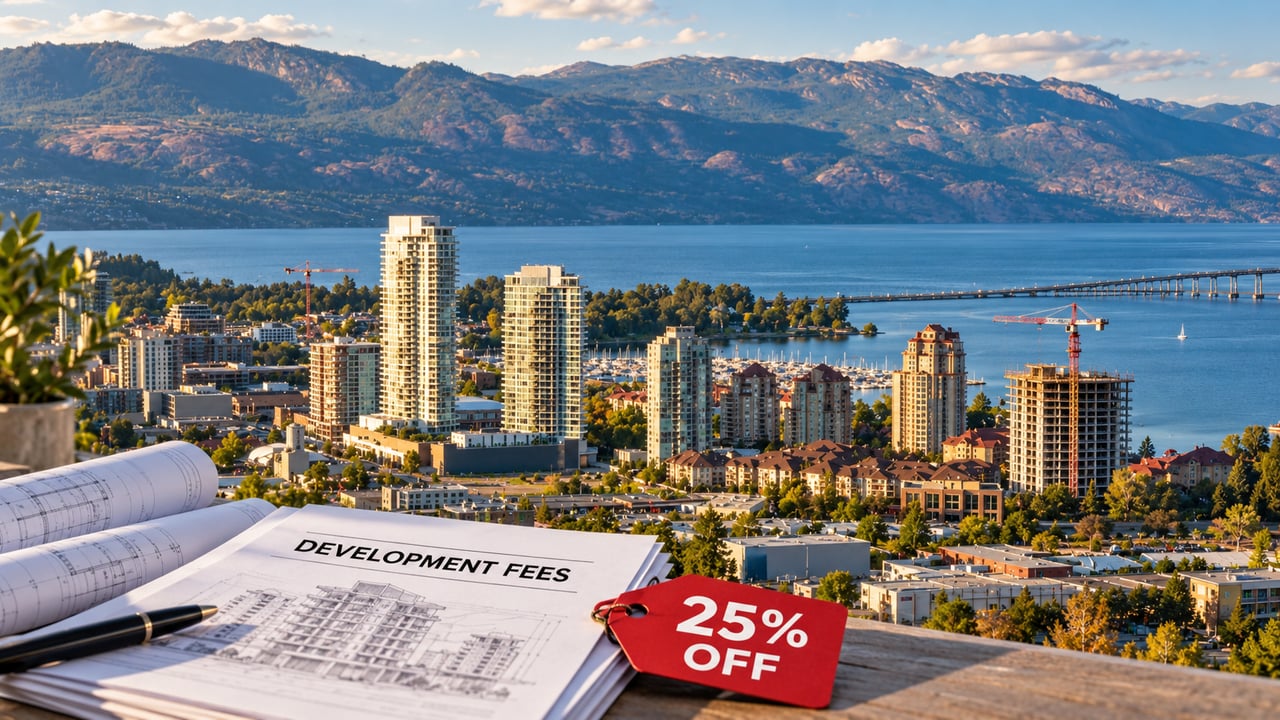
Council approved a temporary 25 per cent reduction in DCC rates from August 4, 2026 through September 30, 2028.
The City's own description says the relief was considered to improve housing project viability while developers face rising construction and financing costs.
The reduction alone probably does not rescue a project that is deeply uneconomic.
DCCs are only one expense.
But the policy tells us something.
The City does not appear worried only about how many apartments are available today.
It also has to think about whether enough projects continue moving through the pipeline.
That doesn't mean Kelowna will have a housing shortage in 2030
This is where I want to be careful.
I am not predicting an apartment shortage in 2030.
There are too many variables between here and there.
Population growth could disappoint.
Immigration could remain lower.
Existing vacancy could take years to absorb.
More homeowners could create secondary suites.
Projects that are currently paused could restart quickly.
Interest rates or construction costs could fall enough to make development work again.
Technology, zoning changes and government incentives could also increase supply.
Any of those could prove this thesis wrong.
There is also still a lot under construction
Another mistake would be assuming falling starts means supply immediately disappears.
It doesn't.
Kelowna still has projects working their way through construction.
Some projects started during the previous boom will continue reaching completion.
That means vacancy could remain elevated even while new starts fall.
The current oversupply and a future shortage can exist in the same story.
They just happen at different times.
The most important number may eventually be completions
Starts tell us what developers are committing to today.
Completions tell us what consumers can actually use.
Over the next few years, I will be watching the gap between them.
If completions remain high while starts stay low, the pipeline is getting emptied.
That does not immediately matter when vacancy is 6.4 per cent.
But eventually it can.
What would make me more worried?
There are four things I would watch together.
If housing starts remain depressed, rental vacancy begins moving back toward normal levels, population growth stays positive and the number of apartments under construction starts falling, I would become much more confident that Kelowna is heading toward another supply squeeze.
One number alone won't tell us that.
Together, they might.
What would prove me wrong?
The opposite.
If vacancy stays above 5 or 6 per cent for several more years, population growth stays near the bottom of projections and developers can restart projects fast enough when demand returns, then Kelowna may have plenty of supply.
That is completely possible.
Which is why I would not buy an apartment today because somebody told me there will be a shortage in 2030.
That would be speculation.
Buyers shouldn't mistake this for a reason to rush
There is a big difference between recognizing a possible future supply issue and saying prices are about to take off.
I don't think they are.
Today's market still matters.
There is significant new-construction inventory.
Developers are competing.
Some are offering substantial incentives.
Resale condo buyers also have much more choice than they did a few years ago.
If you are buying today, negotiate based on today's conditions.
Not a hypothetical shortage four years away.
Investors should pay attention for a different reason
For an investor, this becomes more interesting.
High vacancy today can hurt rents, cash flow and negotiating power.
But if development falls far enough while the population continues growing, today's weak market could eventually produce a much tighter rental market.
The hard part is timing.
Nobody knows exactly when excess supply will be absorbed.
And paying too much today because of something that might happen in 2030 is not a strategy.
The opportunity comes from buying something that makes reasonable sense under today's numbers while understanding how future supply could change.
Sellers shouldn't expect the shortage to save them either
The same warning applies to condo owners.
Falling construction starts do not mean your condo is suddenly worth more.
There is still plenty of competition today.
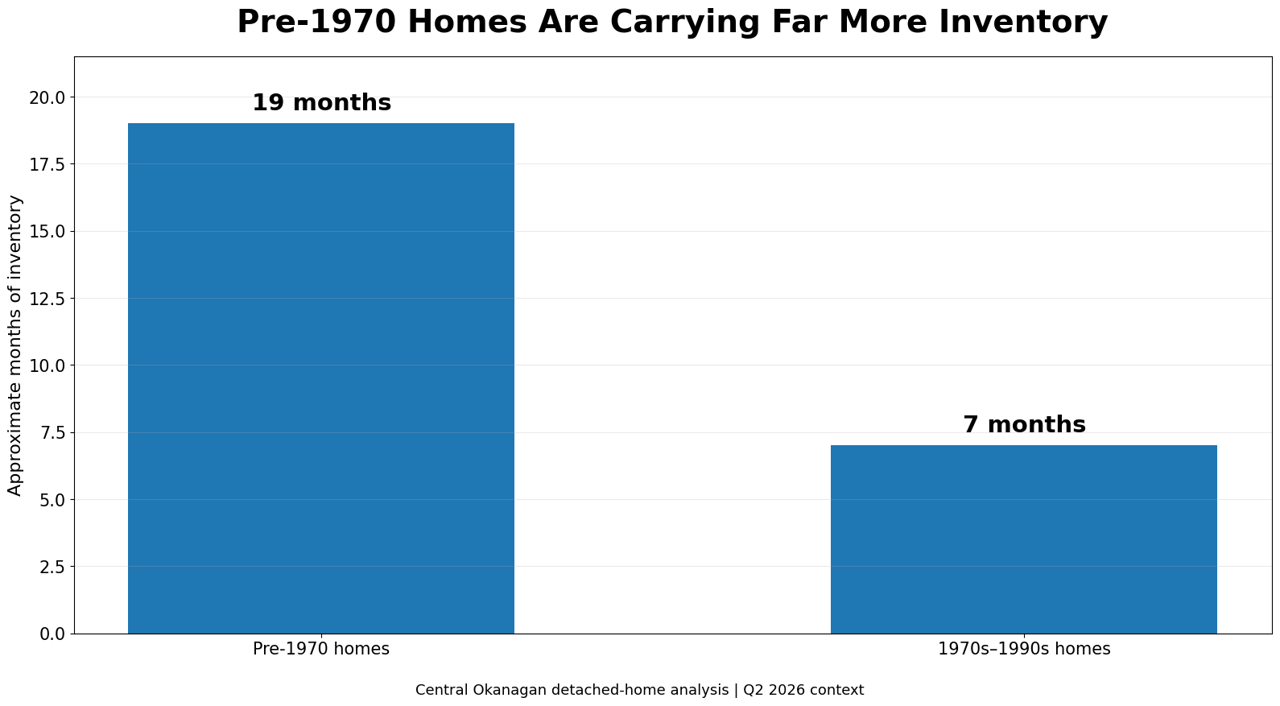
And I recently found something important when I separated Kelowna's developer-held condo inventory from normal resale inventory.
Developer-held apartments were sitting at roughly 17 months of supply.
Resale apartments were closer to 6.6 months.
Those are two very different markets being averaged together.
Today's developer inventory needs to be worked through before a lack of future construction becomes the bigger story.
This could be one of the most important Kelowna housing numbers to watch
For the last few years everyone focused on how many homes were being approved.
Then we focused on how many were being built.
Now I think we need to watch how many are no longer starting.
Because zoning land for housing does not build housing.
Approving an apartment building does not build it.
Even reducing development fees does not guarantee someone will finance and construct it.
The project still has to make economic sense.
Too much today. Not enough tomorrow?
That is the question.
Kelowna has legitimately moved into a much softer apartment market.
Vacancy is high.
Developers have inventory.
Renters have more choice.
Buyers have negotiating power.
None of that should be ignored.
But CMHC's construction data is now moving sharply in the other direction at the same time Kelowna's population and housing plans still assume thousands of additional apartments will eventually be needed.
That does not guarantee a shortage.
It creates the conditions where one could develop.
And because an apartment currently takes more than two years on average just to move from construction start to completion in Kelowna, we may not recognize that shortage until the buildings we needed were supposed to have already been started.
That is why I am going to keep coming back to this number.
The question isn't whether Kelowna has enough apartments today.
It probably does.
The better question is whether we are starting enough today for the Kelowna that exists four years from now.
Mark Coons, BBA, CE
PERSONAL REALTOR CORPORATION® | eXp Realty Kelowna
Team Lead, Selling Okanagan Group
Relocated to Kelowna in 2018
📞 778-946-6454
📩 [email protected]