Kelowna Real Estate Market 2026: Would We Still Bet on the Okanagan?
Happy Canada Day.
Canada turns 159 today.
And I’ll be honest, the last couple of years have not exactly been easy ones for the country.
Population headlines have changed.
Affordability has gotten harder.
The economy has felt choppy.
And a lot of people are wondering what comes next.
Canada Day got me thinking about the country we live in.
But more than that, it got me thinking about the region we live in.
The Okanagan.
And the question I keep coming back to is simple:
Would we still bet on the Okanagan today?
For us, that question is personal.
Back in 2017, Maddie and I packed up our life, left our corporate jobs, gave up pensions and stability, and moved across the country with a one-year-old.
No family here.
No friends here.
No sphere.
No safety net.
I had not spent years vacationing here.
I was not chasing a postcard.
I was looking at the numbers.
Because if you know me, you know I am analytical.
I like stats.
And when you are moving your family across the country, quitting stable jobs, and betting on a place you barely know, you better believe I was not just looking at the lake and the mountains.
Those are great.
But they do not pay the mortgage.
I cared about the fundamentals.
Population growth.
Migration.
Jobs.
Industry mix.
Equity.
Land supply.
Airport traffic.
The long-term draw of the region.
And now, in 2026, I am looking at those numbers again.
The Short Answer: Yes, We Would Still Bet on the Okanagan
Yes, we would still bet on the Okanagan.
But not blindly.
The Kelowna real estate market is not perfect.
Affordability is still a major issue.
Interest rates still matter.
Insurance costs matter.
Taxes matter.
Strata fees matter.
Construction costs matter.
And not every property type is moving the same way.
But when I look at the bigger picture, I still believe the base underneath the Okanagan is stronger than a lot of the headlines make it sound.
People still want to live here.
Businesses still want to operate here.
The airport is moving record numbers of people.
A lot of homeowners still have major equity.
And land is not endless.
That does not mean every listing sells.
It does not mean every buyer can make the numbers work.
It does not mean every development site is worth overpaying for.
But it does mean the long-term fundamentals are still worth watching.
Did We Miss the Growth?
When we moved here, one of my biggest fears was simple:
Did we miss it?
Kelowna was already in the middle of a major growth run.
From 2016 to 2021, the Kelowna CMA became the fastest-growing metro area in Canada.
Not just in BC.
In Canada.
So yes, part of me wondered if we were showing up late.
Looking back, hindsight is always easy.
The hard part is making decisions today.
You never fully know if a decision is right until five or ten years have passed.
That is true when you move cities.
It is true when you buy a home.
It is true when you sell a property.
It is true when you invest in land.
And it is true when you decide to build.
The more I studied the Okanagan, the more the numbers made sense.
And now, almost a decade later, I am still watching those same fundamentals.
What Is Happening in the Okanagan Right Now?
The headlines are not perfect.
Canada’s population growth has changed.
Immigration has slowed.
BC has been under pressure.
Affordability is still a wall.
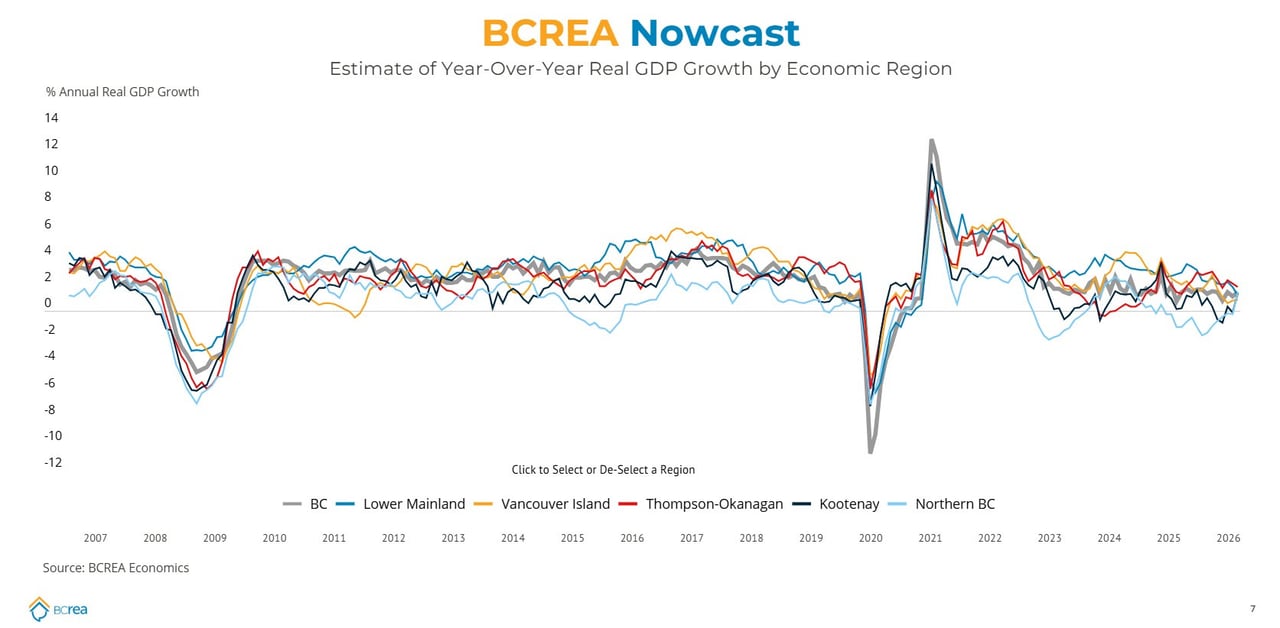
The economy is mixed.
And Okanagan growth has cooled.
All true.
But the better question is not whether the Okanagan has problems.
It does.
The better question is:
Is the base underneath this region still stronger than most places right now?
I think the answer is yes.
Not perfect.
But stronger than the headline makes it sound.
Central Okanagan Population Growth Still Matters
Central Okanagan population in 2016 was about 195,000.
By 2021, it was about 222,000.
By 2025, it was about 254,605.
That is roughly 60,000 more people in under ten years.
Growth has cooled.
In 2025, the Central Okanagan grew by about 1.2%.
That is not massive growth.
But it is still growth.
And in a year where national and provincial headlines were weaker, the Central Okanagan still added people.
If this were a business decision, that would be worth noting.
It means the region is not dead.
It means the story has changed.
But it does not mean the story is over.
Why People Still Want to Live in Kelowna
People are still drawn to the Okanagan for many reasons.
Lifestyle matters.
Weather matters.
The lake matters.
The airport matters.
Healthcare matters.
Education matters.
Small business matters.
Construction matters.
Tourism matters.
Tech matters.
Aviation matters.
The local economy is not built on one thing.
That is one of the reasons I trusted this place in 2017.
It was not just a retirement town.
It was not just a tourism town.
It was not just a construction market.
It had more than one engine.
That matters when you are trying to understand the long-term Kelowna real estate market.
The Honest Problem: Affordability
Now here is the honest side.
Affordability is still the wall.
A lot of people want to live in Kelowna.
But wanting to live here and being able to afford it are not the same thing.
Prices are high.
Wages have not kept up.
Interest rates still matter.
Insurance costs are higher.
Taxes are higher.
Strata fees are higher.
Maintenance costs are higher.
For buyers, this makes the decision harder.
For sellers, it can limit the buyer pool.
For developers and builders, it can make projects harder to pencil out.
That is why I do not think we can just say, “Kelowna needs more housing,” and stop there.
The better question is:
What type of housing does Kelowna actually need?
Kelowna Does Not Just Need More Doors
This is where the conversation gets more interesting.
Kelowna needs more housing.
But not all housing solves the same problem.
A downtown tower does not solve every family’s need for a yard.
A micro-suite does not solve every move-up buyer’s problem.
A luxury home does not help a young family trying to enter the market.
A new apartment does not replace the role that older single-family homes still play.
And a fourplex does not automatically work just because the zoning allows it.
More doors on paper is not the same as useful housing.
Kelowna needs the right housing.
That means homes that match real people’s lives.
Downsizers.
Young families.
Move-up buyers.
First-time buyers.
Workers.
Renters.
Builders.
Investors.
And landowners trying to decide what their property is really worth.
That is the real housing question.
Land Supply Is One of Kelowna’s Biggest Stories
The old model was simple.
Build more single-family homes on the edge of town.
Push farther out.
Add more subdivisions.
But that is not really the Okanagan story anymore.
Kelowna has a Permanent Growth Boundary.
ALR land limits outward growth.
Hillside land can be expensive and complicated.
Servicing is not cheap.
Infrastructure has limits.
And policy is pushing more growth inward, not outward.
That means infill housing will matter more.
Small-scale multifamily will matter more.
Fourplexes, sixplexes, townhomes, row housing, and missing middle housing will matter more.
But again, just because more density is allowed does not mean every site works.
Land price matters.
Servicing matters.
Parking matters.
Unit mix matters.
Construction costs matter.
End-user demand matters.
The buyer at the end of the project matters.
What This Means for Kelowna Sellers
If you are thinking about selling a home in Kelowna, this market is not one-size-fits-all.
Some sellers are sitting on major equity.
Some have no mortgage.
Some are not in a rush.
Some can wait.
Some can renovate.
Some can rent the home out.
Some can help their kids.
Some can downsize when it makes sense.
That creates a different kind of market.
This is not a panic market where every seller has to take a low offer.
A lot of Kelowna homeowners have options.
That can frustrate buyers because prices may not fall as fast as they expect.
But it also shows the strength underneath the market.
Kelowna has always been an equity-heavy real estate market.
That matters.
Is Now a Good Time to Sell a Home in Kelowna?
It depends.
That is the honest answer.
It depends on your property type, condition, price range, location, and your next move.
Turnkey homes can still attract serious buyers.
Family homes in good locations can still perform well.
Homes that are priced properly can still move.
But overpriced listings are being punished.
Older homes that need major work can sit longer.
Land-value properties can be harder to sell if builders cannot make the numbers work.
Condos and strata properties may face more competition depending on the building, fees, rules, and location.
So the better question is not just:
“What can I sell for?”
The better question is:
“What is it costing me to wait?”
Waiting has a cost.
Holding has a cost.
Selling too early has a cost.
Selling too late has a cost.
Doing nothing has a cost too.
What This Means for Kelowna Buyers
If you are buying a home in Kelowna, the opportunity is not that everything is suddenly cheap.
That is not the market we are in.
The opportunity is that buyers may have more choice, more time, and more room to think than they did during the hottest parts of the market.
Some sellers are more negotiable.
Some properties have been sitting.
Some listings need price adjustments.
Some homes are not getting multiple offers.
That can create opportunity.
But the best homes are still usually not cheap.
The best locations still matter.
Turnkey homes still matter.
Family-friendly neighbourhoods still matter.
And the right home can still attract strong interest.
Should I Buy a Home in Kelowna in 2026 or Wait?
Maybe.
But you need to run the numbers.
Waiting can make sense if your finances are not ready.
Waiting can make sense if the monthly payment would stretch you too thin.
Waiting can make sense if you are not sure you will stay long enough.
But waiting also has a cost.
Rent has a cost.
Moving later has a cost.
Missing the right home has a cost.
Buying after rates change has a cost.
Buying after prices move has a cost.
The right question is not always:
“Will prices go up or down next month?”
The better question is:
“What decision gives me the best long-term outcome for my life?”
That is especially true for move-up buyers and young families.
Sometimes the home is not just an investment.
Sometimes it is where your kids grow up.
Sometimes it is about school catchments, yard space, bedrooms, storage, safety, and quality of life.
Those things matter too.
What This Means for Kelowna Developers and Infill Builders
For developers, builders, and landowners, the Kelowna real estate market has changed.
The old mindset was often simple:
Buy land.
Add density.
Build.
Sell.
Profit.
That is not enough anymore.
Today, the numbers need to be sharper.
Land values matter.
Servicing costs matter.
Development cost charges matter.
Timeline matters.
Financing matters.
Construction costs matter.
Parking matters.
Design matters.
Exit value matters.
And most importantly, demand matters.
Just because a site has development potential does not mean it is a good deal.
Just because zoning allows more units does not mean the market will pay enough for the finished product.
Just because Kelowna needs more housing does not mean every infill project works.
Is Kelowna a Good Market for Infill Multifamily Development?
Yes, Kelowna can be a good market for infill multifamily development.
But only when the site, zoning, costs, and end buyer all line up.
Infill builders should be asking better questions:
Can the lot actually support the design?
Is there lane access?
What are the servicing requirements?
Is the property in a location people actually want?
Will the end product appeal to families, downsizers, renters, or investors?
Is there enough margin after construction, financing, selling costs, and risk?
What happens if values soften?
What happens if the project takes longer than expected?
The opportunity is not just building more units.
The opportunity is building the right units.
Kelowna needs housing that real people can actually use.
That could mean family-sized townhomes.
It could mean well-designed fourplexes.
It could mean ground-oriented homes.
It could mean missing middle housing near schools, parks, transit, and daily needs.
The builders who understand the end user will have an advantage.
The builders who only chase density may get caught.
The Big Housing Mismatch in Kelowna
Here is the tension I keep watching.
If the Okanagan is still attracting people, are we building the kind of homes they actually need?
Or are we just adding units on paper?
Because those are not the same thing.
A young family may not want a small condo.
A downsizer may not want stairs or a large yard.
A move-up buyer may need more bedrooms and parking.
A renter may need something close to work.
A builder may need a project that actually pencils.
A seller may need to unlock equity without making a bad next move.
This is why the Kelowna housing market is more complicated than just “prices up” or “prices down.”
The real story is people.
Who is coming here?
Who is leaving?
What can they afford?
What do they actually need?
And does the housing being built match that demand?
Key Kelowna Real Estate Takeaways for 2026
Here is the simple version.
Kelowna is not perfect.
But it is not broken either.
The Okanagan still has strong long-term demand.
Population growth has cooled, but the region is still attracting people.
Affordability is the biggest challenge.
Land supply is limited.
More growth is being pushed inward.
Sellers with equity are not always forced to sell.
Buyers may have more choice, but the best homes still hold value.
Developers need to be careful with land price, servicing, construction costs, and final demand.
Builders should focus on what people actually need, not just what zoning allows.
And everyone should be thinking about opportunity cost.
The Opportunity Cost of Buying, Selling, Holding, or Waiting
This is the part I keep coming back to.
Every decision has a cost.
Buying has a cost.
Waiting has a cost.
Selling too early has a cost.
Holding too long has a cost.
Renting has a cost.
Renovating has a cost.
Investing has a cost.
Doing nothing has a cost too.
That is why I have been building an Opportunity Cost Calculator.
The goal is simple.
To help people weigh the real numbers behind buying, selling, renting, investing, downsizing, holding, renovating, or moving.
Because in this market, the right decision is not always obvious.
For a seller, the question may be:
“Should I sell now or wait?”
For a buyer, it may be:
“Should I buy now or keep renting?”
For a downsizer, it may be:
“Should I move before the house becomes too much work?”
For a move-up family, it may be:
“Should we stretch for the right home now or wait another year?”
For a builder, it may be:
“Does this infill site actually make sense?”
For a landowner, it may be:
“Is my property worth more as a home, a rental, or a development site?”
Those are not easy questions.
But they are the questions that matter.
FAQ: Is Kelowna Real Estate Still a Good Long-Term Investment?
Kelowna can still be a good long-term real estate market.
But it depends on the property.
The region still has strong lifestyle demand, limited land, population growth, and a diverse economy.
But buyers and investors need to be careful.
You still need to look at price, carrying costs, rental rules, strata fees, condition, location, and future resale demand.
Not every property is a good investment just because it is in Kelowna.
FAQ: Are Kelowna Home Prices Going to Drop?
Nobody knows for sure.
Some overpriced listings may need to adjust.
Some slower property types may face pressure.
But Kelowna also has many equity-rich owners who are not forced to sell.
That can limit how far prices fall in stronger parts of the market.
This is why buyers should not assume every seller is desperate.
And sellers should not assume every buyer will overpay.
Pricing matters more now.
FAQ: Should I Sell My Kelowna Home Now or Wait?
The better question is:
What is waiting costing you?
If your home no longer fits your life, maintenance is getting harder, or your next move matters more than timing the market, selling sooner may make sense.
If you have no pressure, your home is easy to carry, and you are comfortable waiting, that may also be reasonable.
The right answer depends on your numbers and your life.
FAQ: What Type of Housing Does Kelowna Need Most?
Kelowna needs more housing.
But more importantly, Kelowna needs the right housing.
That means housing for downsizers, young families, workers, renters, first-time buyers, and move-up buyers.
More doors alone will not solve the problem if the homes are too small, too expensive, or in the wrong location.
FAQ: Is Infill Development Worth It in Kelowna?
It can be.
But the numbers need to work.
Builders and developers should look closely at zoning, lot size, lane access, servicing, parking, construction costs, resale values, and demand.
A good infill project starts with the end user.
Who is going to live there?
What can they afford?
And does the final product solve a real housing need?
So, Would We Still Bet on the Okanagan?
Yes.
We would still bet on the Okanagan.
Not because it is perfect.
It is not.
Affordability is real.
Land supply is real.
Growth has cooled.
BC’s economy is choppy.
Not every listing is selling.
Not every buyer can make the math work.
Not every property type is in demand.
And not every development site is a winner.
But the fundamentals that made us bet on this place are still here.
People still want to live here.
The economy has more than one engine.
A lot of owners have equity.
Land is not endless.
The population is changing.
And housing needs are changing right along with it.
That is what I am watching.
Not just whether the market is up or down this month.
But who is coming here.
Who is leaving.
What they can afford.
What they actually need.
And whether the housing being built matches the people who want to live here.
That is the real story.
Maddie and I bet on ourselves.
But we also bet on the Okanagan.
And even with the headwinds, I am still glad we did.
Yes, we would continue to bet on it again.
The future will always have fear in it.
You never know if making a decision was the right one until five or ten years have passed.
At some point, you have to make the best decision you can with the numbers in front of you.
And if you are trying to make that decision right now — buying, selling, downsizing, moving up, investing, building, or holding — the most important thing is to understand the cost of each option.
Because in the Kelowna real estate market, doing nothing is still a decision.
And it has a cost too.
If you want a copy of the Opportunity Cost Calculator when it is ready, just let me know.
Mark Coons, BBA, CE
REALTOR® | eXp Realty Kelowna
Team Lead, Selling Okanagan Group
Relocated to Kelowna in 2018
📞 778-946-6454
📩 [email protected]