Why Builders Stopped Building Starter Homes in Kelowna
For years, buyers have been asking the same question:
Why doesn’t anyone build a simple, affordable starter home anymore?
Not a luxury home.
Not a 3,500-square-foot house with five bedrooms and a legal suite.
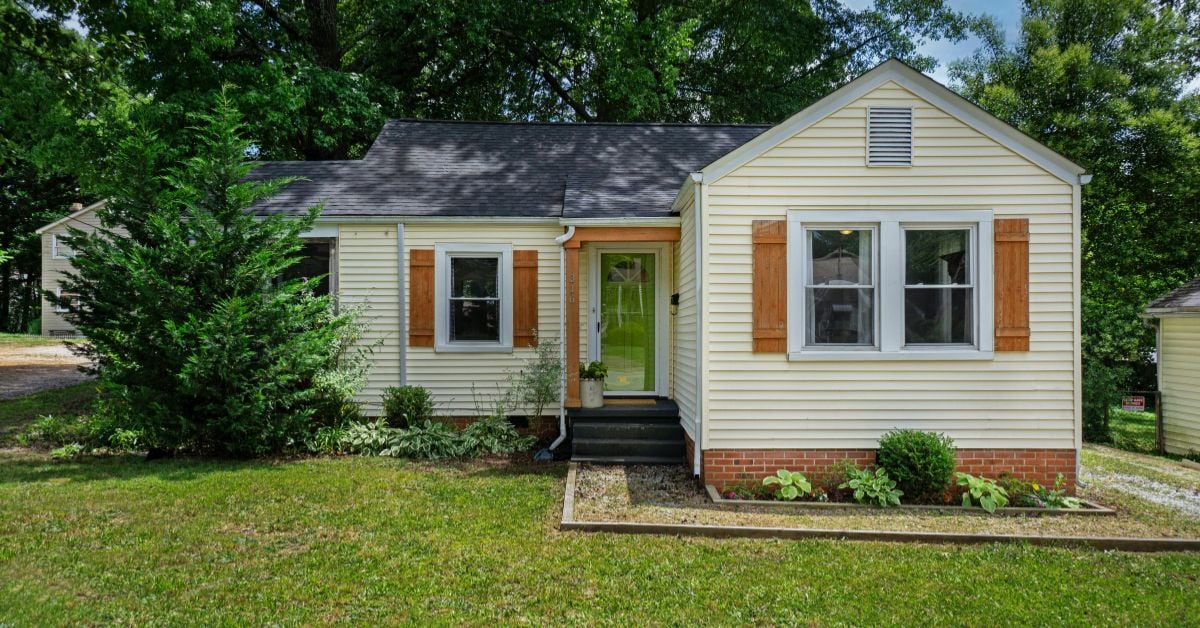
Just a smaller detached home with enough space for a couple, a young family or someone downsizing.
The simple answer is that builders did not suddenly stop liking small homes.
The numbers stopped working.
A smaller home may sell for more per square foot, but it often does not bring in enough total revenue to cover the cost of the land, permits, servicing, financing and construction.
That is why Kelowna keeps getting larger detached homes, smaller condos and fewer of the family-sized homes buyers say they want most.
Small Homes Are Not Actually Cheap to Build
Many buyers assume a 1,400-square-foot home should cost about half as much to build as a 2,800-square-foot home.
It does not work that way.
Every house still needs many of the same expensive parts:
- A kitchen
- Bathrooms
- A furnace or heat pump
- Electrical service
- Plumbing
- A roof
- A foundation
- Permits
- Development fees
- Water and sewer connections
Those costs do not drop by half just because the home is smaller.
A 1,400-square-foot house still needs a kitchen. It still needs heating, plumbing and electrical systems. It still sits on land that may have cost hundreds of thousands of dollars before construction even begins.
The builder saves money on some lumber, drywall, flooring and labour.
But many of the largest project costs remain.
What Kelowna Sales Tell Us
When Central Okanagan detached home sales are sorted by size, a clear pattern appears.
Over the last 12 months:
- Homes under 1,500 square feet sold for about $526 per square foot
- Homes from 1,500 to 2,500 square feet sold for about $400 per square foot
- Homes from 2,500 to 3,500 square feet sold for about $371 per square foot
- Homes from 3,500 to 5,000 square feet sold for about $388 per square foot
- Homes over 5,000 square feet sold for about $445 per square foot
The smaller home earns the highest price per square foot.
At first, that sounds like good news for builders.
But builders do not pay their bills with a rate per square foot. They need enough total dollars left at the end of the project.
Consider a simple example.
A 1,400-square-foot home selling for $526 per square foot would be worth roughly $736,000.
A 3,000-square-foot home selling for $371 per square foot would be worth roughly $1.11 million.
The smaller home earns more for every square foot.
The larger home creates roughly $377,000 more in total revenue.
That extra revenue can be the difference between a project moving ahead or not getting built at all.
The Land Costs the Same Either Way
Land is one of the biggest reasons starter homes disappeared.
A builder purchasing a single lot in Kelowna may pay the same amount whether they plan to build a 1,400-square-foot home or a 3,000-square-foot home.
The smaller home does not come with a smaller land bill.
The builder may also face costs for:
- Demolition
- Site preparation
- Utility upgrades
- Engineering
- Architectural plans
- City permits
- Development cost charges
- Interest on borrowed money
- Insurance
- Marketing
- Real estate commissions
Many of these costs are fixed or only change slightly based on the final size of the home.
Once the builder has spent that much just to get the project started, adding more square footage can be one of the easiest ways to increase the final selling price.
That pushes builders toward larger homes.
Bigger Homes Can Offer Better Margins
The first portion of a house is often the most expensive to build.
That is where the kitchen, bathrooms, mechanical systems and major servicing costs are located.
Once those basics are in place, adding another bedroom, family room or upper floor may cost less per square foot than the first section of the home.
The extra space still costs money.
But it may produce more additional revenue than additional cost.
That is why a builder may decide to build 2,800 square feet instead of 1,500 square feet, even when more buyers say they want the smaller home.
They are not necessarily building what the market needs most.
They are building what the project can support financially.
Buyers Want Affordable Homes, Not Just Small Homes
There is another important difference.
A small home and an affordable home are not always the same thing.
A newly built 1,400-square-foot detached home may still require:
- Expensive land
- New construction labour
- Modern building standards
- Municipal fees
- Financing costs
- GST
Even if the house is modest, the final price may still be far above what a first-time buyer can afford.
That creates a difficult problem.
The home may be too expensive for a typical starter-home buyer, but not large enough for a move-up buyer willing to pay more.
The builder gets stuck in the middle.
Why Five-Bedroom Homes Keep Appearing
This helps explain why so many newer detached homes in Kelowna are large.
A larger home can serve several buyer groups:
- Families needing more bedrooms
- Buyers wanting a home office
- Buyers planning for parents or adult children
- Investors wanting a legal suite
- Buyers looking for rental income
- Luxury buyers wanting more space
Adding a suite can also make the larger price easier for the buyer to carry.
A $1.3 million home with rental income may feel more manageable than a $900,000 smaller home without any income potential.
This does not mean the larger home is more affordable.
It means the buyer has more ways to justify the payment.
The Starter Home Did Not Disappear Everywhere
Older starter homes still exist across Kelowna, Rutland, Glenmore, West Kelowna and other parts of the Central Okanagan.
Many were built decades ago, when land and development costs were lower.
These homes can include:
- Smaller bungalows
- Half-duplexes
- Older townhomes
- Manufactured homes
- Homes with unfinished basements
- Houses on smaller lots
These properties often fill the role that new starter homes used to fill.
The problem is that they are limited in number.
When one comes up for sale, it may attract strong attention because buyers know it cannot easily be replaced at the same price.
Smaller Homes Can Be Valuable to Sellers
If you own a smaller, efficient detached home, the lack of new competition can work in your favour.
Buyers may value:
- A lower total purchase price
- A manageable yard
- Lower heating costs
- A central location
- Renovation potential
- Future redevelopment possibilities
- The ability to own land without buying a large house
The Central Okanagan sales data shows smaller detached homes earn a strong price per square foot.
But sellers still need to be careful.
Active listings under 1,500 square feet have been asking well above what recent buyers have actually paid.
Scarcity creates attention.
It does not remove the buyer’s budget.
A smaller home can command a strong rate per square foot and still sit unsold if the total price is pushed too far.
Townhomes Are Becoming the New Starter Home
If the economics of a small detached home no longer work, the next option is often a townhome.
Townhomes allow builders to spread the land and servicing costs across several homes.
That makes it easier to create:
- Two-bedroom homes
- Three-bedroom homes
- Small yards
- Garages
- Family-friendly layouts
- Lower purchase prices than detached homes
In the Central Okanagan, the busiest townhome size range has been approximately 1,200 to 1,600 square feet.
That is enough space for a small family without requiring the price of a newly built detached home.
For many Kelowna buyers, this is now the modern starter-home category.
Could Small-Scale Multi-Unit Housing Help?
Changes to zoning may create another path.
Instead of building one small house on one expensive lot, builders may be able to create:
- Duplexes
- Fourplexes
- Row homes
- Smaller strata homes
- Homes with secondary suites
Spreading the land cost across several units can help lower the cost of each individual home.
But zoning alone will not solve everything.
The project still has to deal with construction costs, financing, parking, servicing and city approval.
Allowing more homes is important.
Making those homes financially realistic is the harder part.
What Would Bring the Starter Home Back?
There is no single fix.
A real starter-home strategy would likely require several changes working together:
- Smaller lots
- Faster approvals
- Lower servicing costs
- More pre-approved building designs
- Reduced parking requirements where appropriate
- More duplex and fourplex construction
- Family-sized townhomes
- Lower development fees for smaller homes
- Better access to financing for small builders
Most importantly, housing targets may need to measure more than the total number of units created.
They should also look at:
- Number of bedrooms
- Rental versus ownership
- Ground-oriented housing
- Family-sized homes
- Purchase price
- Monthly ownership costs
- Who can realistically afford the finished product
Kelowna can hit its housing target and still miss the housing people are looking for.
The Bottom Line
Builders did not stop building starter homes because buyers stopped wanting them.
They stopped because the price of land, approvals, servicing and construction made the smaller detached home one of the hardest projects to make work.
A small home may earn the best price per square foot.
A larger home often earns more total dollars.
And in today’s market, those total dollars are what allow the project to move forward.
That is why the true starter home has shifted away from new detached housing and toward older homes, townhomes, duplexes and small-scale multi-unit projects.
The question is no longer just, “How many homes are we building?”
It is:
Are we building homes that the people who live here can actually use and afford?
Thinking about buying, selling or developing in the Central Okanagan? I can help you understand where your property fits in the market and what the current numbers are really saying.
Mark Coons, BBA, CE
REALTOR® | eXp Realty Kelowna
Team Lead, Selling Okanagan Group
Relocated to Kelowna in 2018
📞 778-946-6454
📩 [email protected]