Why Small Homes Cost More Per Square Foot in Kelowna
A smaller home should cost less.
And in total dollars, it usually does.
But when you break the price down by square foot, the opposite often happens.
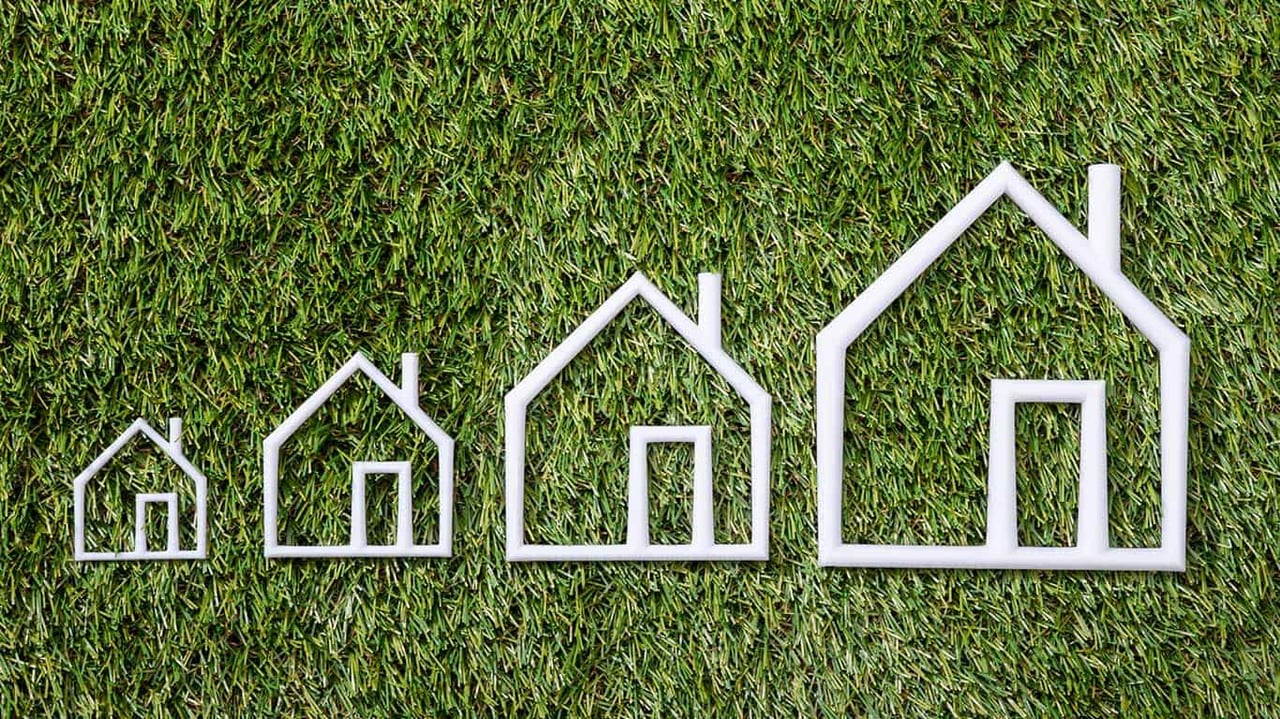
Across the Central Okanagan, smaller homes regularly sell for more per square foot than larger homes.
That can seem backwards.
Why would a 1,000-square-foot condo sell for a higher rate than a 1,500-square-foot condo? Why would a small bungalow cost more per foot than a much larger family home?
The answer comes down to fixed costs, buyer demand and how much useful space is packed into the home.
What Does Price Per Square Foot Mean?
Price per square foot is calculated by dividing the sale price by the finished living area.
For example:
A 1,000-square-foot home that sells for $500,000 sold for $500 per square foot.
A 2,000-square-foot home that sells for $800,000 sold for $400 per square foot.
The larger home costs $300,000 more overall.
But the buyer receives each square foot at a lower rate.
That is the pattern we see across detached homes, townhomes and apartments in the Central Okanagan.
What the Central Okanagan Sales Show
I reviewed sales from the last 12 months and grouped them by property type and size.
The same basic pattern appeared in all three markets.
The smaller the home, the higher the price per square foot.
The price usually falls as the home becomes larger, before rising again at the luxury end of the market.
It creates something similar to a U-shaped curve.
Small homes sit high because they contain expensive features in a small footprint.
Mid-sized homes usually provide the best rate per square foot.
Very large homes rise again because they often include premium land, views, waterfront or luxury finishes.
Small Detached Homes Carry the Highest Rate
Here is how detached home sales broke down:
- Under 1,500 square feet: $526 per square foot
- 1,500 to 2,500 square feet: $400 per square foot
- 2,500 to 3,500 square feet: $371 per square foot
- 3,500 to 5,000 square feet: $388 per square foot
- More than 5,000 square feet: $445 per square foot
A detached home under 1,500 square feet sold for approximately 42% more per square foot than a home between 2,500 and 3,500 square feet.
That does not mean the small home was more expensive overall.
It means buyers paid a higher rate for every foot they received.
The lowest rate was found between 2,500 and 3,500 square feet.
That range also produced 700 sales, making it one of the most active parts of the detached market.
Why Small Detached Homes Cost More Per Foot
Every detached home needs land.
It also needs:
- A foundation
- A roof
- A kitchen
- Bathrooms
- Heating and cooling
- Plumbing
- Electrical service
- Utility connections
- Permits and inspections
Many of these costs do not change much when a home becomes smaller.
A 1,300-square-foot home still needs a kitchen, furnace and electrical panel.
It still sits on a lot.
It still needs a driveway, landscaping and connections to water and sewer.
When those costs are spread across fewer square feet, the rate per foot rises.
Land Has a Major Impact
Price per square foot becomes especially tricky with detached homes because it only measures the building.
It does not directly measure the land.
Imagine two homes sitting on similar lots.
One is 1,200 square feet.
The other is 2,400 square feet.
Even if the lots have similar values, the smaller home has half as many square feet over which to spread the land cost.
That pushes its price per square foot higher.
This is common in older Kelowna neighbourhoods, where a modest bungalow may sit on a valuable lot with redevelopment potential.
The buyer may be paying for the location and land as much as the house itself.
Larger Homes Spread Costs Across More Space
Once a home has a kitchen, bathrooms, mechanical systems and utility connections, adding more space can become less expensive per square foot.
Extra bedrooms, hallways and family rooms are generally simpler than kitchens and bathrooms.
They still cost money to build and maintain.
But they do not contain the same concentration of expensive materials and systems.
That is why a larger home can offer more space at a lower rate per foot.
The buyer pays more overall, but each additional square foot becomes cheaper.
Townhomes Follow an Even Cleaner Pattern
Townhome sales showed the same trend:
- Under 1,200 square feet: $446 per square foot
- 1,200 to 1,600 square feet: $441 per square foot
- 1,600 to 2,000 square feet: $387 per square foot
- 2,000 to 2,800 square feet: $356 per square foot
- More than 2,800 square feet: $328 per square foot
Unlike detached homes, the price did not rise again at the largest size.
That is likely because townhomes do not normally come with large acreages, private waterfront or highly valuable standalone lots.
The rate simply declined as the homes became larger.
The busiest range was between 1,200 and 1,600 square feet, with 255 sales.
That is typically enough room for two bedrooms plus a den or a compact three-bedroom layout.
It is also one of the most practical sizes for young families, downsizers and first-time move-up buyers.
Why Larger Townhomes Can Look Like Better Value
A large townhome may have:
- The same number of kitchens
- A similar number of bathrooms
- A similar garage
- The same shared amenities
- The same common-property expenses
But it spreads those features over more living space.
That can make the larger home look like much better value on a price-per-square-foot basis.
However, it may still carry:
- A higher total purchase price
- Higher property taxes
- Higher heating costs
- Potentially higher strata fees
A lower rate per square foot does not automatically mean the home is the better financial choice.
It simply means you are receiving more space for every dollar spent.
Apartments Show the Biggest Difference
Apartment sales showed the steepest curve:
- Under 600 square feet: $724 per square foot
- 600 to 900 square feet: $510 per square foot
- 900 to 1,200 square feet: $409 per square foot
- 1,200 to 1,600 square feet: $400 per square foot
- More than 1,600 square feet: $506 per square foot
A condo under 600 square feet sold for almost 77% more per square foot than one between 1,200 and 1,600 square feet.
That is a large difference.
The apartment market also shows why relying on price per square foot alone can lead buyers in the wrong direction.
Why Very Small Condos Are So Expensive Per Foot
A 500-square-foot condo still needs:
- A kitchen
- A bathroom
- Laundry
- Heating and cooling
- Electrical service
- Windows
- An entrance
- Storage
- Access to elevators and common areas
Those are some of the most expensive parts of a home.
In a small studio or one-bedroom unit, they take up a large share of the total space.
A larger condo may add bedrooms and living space without adding another full kitchen or mechanical system.
That lowers the average price per square foot.
The Building Costs Are Also Shared
Condo buyers are not only paying for the space inside their unit.
Part of the purchase price also supports:
- Elevators
- Hallways
- The lobby
- The parkade
- Amenity areas
- The building structure
- Fire-safety systems
- Landscaping
- Common mechanical equipment
A small condo has fewer private square feet over which to spread those shared building costs.
That helps explain why the smallest units often carry the highest rates.
Why Large Condos Rise Again
Apartments over 1,600 square feet climbed back to approximately $506 per square foot.
This is not simply because they are large.
Many units in this category are:
- Penthouses
- Waterfront homes
- Corner units
- Luxury residences
- Homes with large patios
- Units with premium lake or city views
At that end of the market, buyers may be paying more for the position in the building than the actual floor area.
It is similar to the luxury increase seen in very large detached homes.
The view, location and rarity start carrying more of the price.
Does a High Price Per Square Foot Mean a Home Is Overpriced?
Not necessarily.
A small home can fairly sell for a higher rate because it may offer:
- A lower total purchase price
- A strong location
- Lower maintenance
- Efficient use of space
- A renovated interior
- Valuable land
- Limited competition
The important question is not whether the rate is high.
It is whether the rate is reasonable compared with similar homes of the same size, property type, age and location.
Comparing a 600-square-foot condo with a 1,300-square-foot condo is not an equal comparison.
The smaller home should usually be expected to carry a higher rate.
Does a Low Price Per Square Foot Mean a Bargain?
It can, but not always.
A low rate may be connected to:
- A poor layout
- Needed renovations
- High strata fees
- A leasehold interest
- A difficult location
- Unusable space
- A large unfinished area
- An older building
- Major upcoming repairs
A 3,500-square-foot home may appear inexpensive per foot.
But if the buyer only needs 2,000 square feet, the extra space may create higher carrying costs without adding much personal value.
You are still paying for the whole home, even when the rate looks attractive.
Useful Space Matters More Than Total Space
Not every square foot has equal value.
Buyers normally value:
- Kitchens
- Living rooms
- Bedrooms
- Bathrooms
- Home offices
- Usable storage
They may place less value on:
- Long hallways
- Awkward corners
- Low-ceiling basements
- Oversized mechanical rooms
- Poorly finished additions
- Rooms that do not serve a clear purpose
A well-designed 1,300-square-foot home can feel more useful than a poorly designed 1,700-square-foot home.
The larger home may have a lower rate per foot.
That does not mean it provides a better living experience.
What Buyers Should Look At
Price per square foot can be useful when comparing similar homes.
It becomes less reliable when the homes are different in size, age, condition, tenure or location.
Buyers should also consider:
- Total purchase price
- Monthly mortgage payment
- Property taxes
- Strata fees
- Heating and insurance costs
- Renovation needs
- Layout
- Parking
- Outdoor space
- Resale demand
The best value is not always the lowest rate per foot.
It is the home that provides the right amount of useful space without stretching the buyer beyond a comfortable budget.
What Sellers Should Understand
Smaller homes can achieve some of the highest rates per square foot in the market.
That can be good news for sellers.
A smaller detached home may attract:
- First-time buyers
- Downsizers
- Investors
- Buyers wanting land
- Buyers who prefer a central location
But a high rate per foot does not give sellers permission to ignore the total price.
In the detached market, active homes under 1,500 square feet were asking approximately 26% more per square foot than recent sold homes.
That shows the limit of scarcity.
Buyers may compete for a smaller home, but they will still compare the total price with larger townhomes, half-duplexes and older detached options.
Scarcity attracts buyers.
The right price gets the home sold.
Why Price Per Square Foot Works Best in Groups
The most useful way to analyze price per square foot is to compare a property with homes in a similar size band.
For example:
A 750-square-foot apartment should be compared with other apartments between roughly 600 and 900 square feet.
A 1,400-square-foot townhome should be compared with other townhomes between 1,200 and 1,600 square feet.
A 3,000-square-foot detached home should be compared with similar detached homes between 2,500 and 3,500 square feet.
This helps remove some of the distortion caused by size.
From there, adjustments can be made for location, condition, views, land, parking and other features.
The Bottom Line
Small homes cost more per square foot because the most expensive parts of a home are packed into less space.
The land, kitchen, bathrooms, mechanical systems and utility costs do not disappear when the home becomes smaller.
They are simply divided across fewer square feet.
Larger homes normally offer a cheaper rate per foot because those costs are spread across more space.
At the luxury end, the rate can rise again as buyers begin paying for waterfront, acreage, views and rarity.
Price per square foot is helpful.
But it is not a complete valuation method.
The smartest way to use it is to compare similar homes in the same property type and size range, then look at the total price, layout, condition and monthly cost.
The cheapest square foot is not always the best home.
And the most expensive square foot is not always overpriced.
It all depends on what comes with it.
Thinking about buying or selling in Kelowna or the Central Okanagan? I can help you understand how your property compares with similar homes and what buyers are actually paying.
Mark Coons, BBA, CE
REALTOR® | eXp Realty Kelowna
Team Lead, Selling Okanagan Group
Relocated to Kelowna in 2018
📞 778-946-6454
📩 [email protected]