What Canada's Debt Crisis Means for Kelowna Real Estate in 2026
Quick Answer: Canada's household debt sits at $1.77 for every dollar of disposable income — the worst in the G7. That national fragility doesn't crash Kelowna's market, but it does shape it: fewer over-leveraged buyers, a renewal wave squeezing some owners, and opportunity for the equity-backed buyers who dominate the Okanagan right now.
Every few months a headline lands about Canadians drowning in debt, and a client texts me asking if Kelowna is about to fall off a cliff. Short answer: no. Longer answer: the debt story is real, it's serious, and it absolutely changes who's buying and selling here — just not in the doom-loop way the national headlines imply.
I've tracked Central Okanagan sales data for 27 years. I've watched this market move through rate spikes, credit crunches, and three separate "this is the top" moments that weren't. So let me give you the honest read on what Canada's debt picture actually means for buying or selling a home in Kelowna this year.
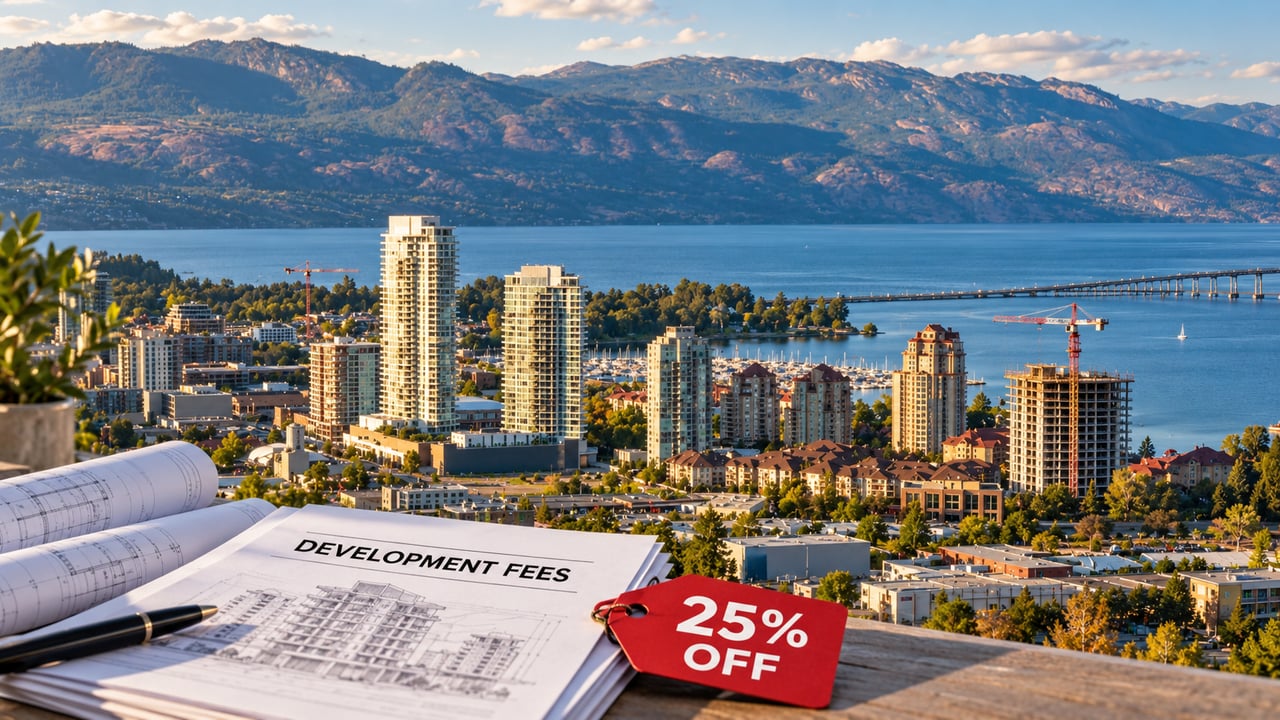
[Image Placeholder: Aerial photo of Kelowna and Okanagan Lake from the air — alt text: "Kelowna BC real estate market overlooking Okanagan Lake in 2026"]
How Bad Is Canada's Debt Problem, Really?
Let's start with the numbers, because the numbers are genuinely ugly.
As of the most recent Statistics Canada data, Canadian households owed $1.77 for every dollar of disposable income — a debt-to-income ratio of 177.2%, climbing for the fifth straight quarter. Total household credit market debt has now topped $3.2 trillion.
Put us against our peers and it's worse than it sounds. Canadian household debt has hit roughly 103% of GDP — the highest in the G7, ahead of even the United States at around 76%. Among developed economies, only Japan comes close.
The single biggest driver is mortgage debt, which makes up about 73% of all household debt in Canada. And the root cause isn't reckless spending — it's housing prices in Toronto and Vancouver pulling the national average into the stratosphere.
That last point matters more than almost anything else in this conversation, and I'll come back to it.
Why the National Number Doesn't Tell You About Kelowna
Here's the trap most people fall into: they read a national debt statistic and apply it to a local market. Those are two different things.
The debt-to-income ratio is a national average dominated by the two most expensive housing markets in the country. When someone in Vancouver carries a $1.4M mortgage on a townhouse, they drag the whole country's average up. That tells you very little about a paid-down family home in Glenmore or a move-up buyer in Lake Country.
What the national number does tell you is the backdrop. A market where most participants are highly leveraged is more sensitive to income shocks and rate changes than one where households have breathing room. That sensitivity doesn't stop deals from happening — it shapes who's making them.
And in the Okanagan, the people making them right now are a specific type of buyer.
Who's Actually Buying in Kelowna in 2026
In the deals I'm closing this year, the active buyers are overwhelmingly local, equity-backed, and buying for real-life reasons — a growing family, a relocation, a downsize, a divorce, a new job. Not speculators trying to flip in 18 months.
That's a meaningful difference. Survey data from the Association of Interior Realtors has consistently shown first-time buyers and move-up buyers driving Central Okanagan activity, not investors stretching to the edge of their pre-approval.
Equity-backed demand is durable demand. It doesn't evaporate the moment a debt headline runs, because these buyers aren't the over-leveraged households the national statistic is warning about. They're often the ones selling a property with a big chunk of equity and rolling it into the next one.
The Kelowna read: A high national debt ratio makes the country fragile. It does not make your equity-backed move fragile. Know which buyer you are.
The Mortgage Renewal Wave Is the Real Local Pressure Point
If there's one piece of the debt story that genuinely lands on Kelowna doorsteps, it's mortgage renewals.
The Bank of Canada has reported that about 60% of all outstanding Canadian mortgages renew in 2025 or 2026. Most of those borrowers hold five-year fixed mortgages — meaning many locked in during the ultra-low pandemic era and are renewing into a very different world.
Here's the nuance that gets lost: the payment shock is real but smaller than the panic suggests. The Bank of Canada's own analysis pegs the average payment increase for 2026 renewals at roughly 6% above December 2024 levels — not the doubling some headlines imply. Rates have come down meaningfully from their peak.
Still, 6% on average hides a wide spread. Some Kelowna owners who locked in at sub-2% will feel a real pinch. And that's where the local opportunity — and the local risk — actually live.
What the Renewal Wave Means If You're Selling
If you're an owner facing a sharp payment jump and your budget's already tight, 2026 is the year to be honest with yourself about holding versus selling. I'd rather have that conversation with you now, at a calm table, than after you've missed a payment. Selling from a position of equity beats selling from a position of stress every single time.
What It Means If You're Buying
A subset of stretched owners will list. That doesn't mean fire sales across the board — Okanagan inventory is still tight by historical standards — but it does mean more motivated sellers than we saw in 2021-2022. For a patient, pre-approved, equity-backed buyer, that's a genuine edge.
Where Are Interest Rates Headed in 2026?
This is the question under every debt conversation, so let's be direct.
The Bank of Canada's overnight rate has held at 2.25% since October 2025, sitting at the low end of its neutral range. The broad consensus from major lenders is that rates stay roughly flat through 2026, with no further cuts expected and some forecasters now flagging a small chance of a hike in late 2026 if inflation and oil prices push higher.
What that means in plain terms:
- Variable-rate holders: payments largely stable for now
- Renewing owners: you're in a far better spot than anyone who renewed in 2023-2024 at the peak
- Buyers: don't wait for a dramatic rate-cut rescue — the era of emergency-low rates is over, and the market has already priced in most of what's coming
The takeaway I give every client: stop trying to time the rate, and start running your actual numbers. A home you can afford at today's rate is a better decision than a home you're gambling on at a hoped-for future rate.
Could Canada's Debt Trigger a Kelowna Crash?
I get asked this constantly, so here's my honest, on-the-record read.
A national debt problem becomes a local crash only if it forces a wave of distressed selling that overwhelms demand. For that to happen in Kelowna, you'd need some combination of: a sharp spike in local unemployment, a rate shock well beyond current forecasts, and forced sellers vastly outnumbering buyers.
Right now, none of those three is flashing red here. Western Canadian labour markets have held up better than Ontario's, the rate outlook is stable-to-slightly-higher rather than spiking, and Okanagan demand remains anchored by that equity-backed local buyer base.
Could it soften? Yes. Flat-to-modest is a realistic 2026 read for parts of this market, and I'd rather tell you that than sell you a fantasy. Could it crash purely on national debt headlines? I don't see the mechanism for it here. Kelowna's fragility profile is simply different from Toronto's or Vancouver's condo glut.
Canada Debt Crisis and Kelowna Real Estate: FAQ
Does Canada's household debt affect Kelowna home prices directly? Not directly. The national debt-to-income ratio is an average dominated by Toronto and Vancouver. Kelowna prices are driven by local supply, local demand, and the equity position of local buyers — which is far healthier than the national headline implies.
Is now a bad time to buy in Kelowna because of the debt situation? No — if you're buying within your means for a real-life reason, the debt backdrop actually favours you. Stretched sellers create more motivated listings, and you face less competition from over-leveraged speculators than in the boom years.
Will the mortgage renewal wave crash the Kelowna market? Unlikely. About 60% of Canadian mortgages renew in 2025-2026, but the Bank of Canada estimates the average 2026 payment increase at around 6% — manageable for most. A minority of stretched owners may list, which is more opportunity than threat for buyers.
Should I wait for interest rates to drop before buying? The consensus is rates stay flat in 2026 with no further cuts expected — and a possible hike late in the year. Waiting for a rate rescue that forecasters don't see coming is a weak strategy. Run your numbers at today's rate instead.
Are Kelowna buyers as indebted as the national average suggests? In my deals this year, no. The active Okanagan buyer is typically local and equity-backed — often rolling significant equity from a previous sale into the next purchase, not maxing out a pre-approval.
The Bottom Line on Canada's Debt and Kelowna Real Estate
Canada's debt crisis is a real, structural problem — most of it sitting in Toronto and Vancouver mortgages. For Kelowna, it's a backdrop, not a trigger. It thins out the over-leveraged buyers, puts real pressure on a minority of renewing owners, and quietly hands the advantage to anyone buying or selling from a position of equity and patience.
That's not a crash story. It's a be-smart story.
👉 See the latest homes for sale in Kelowna here
About the Author
Mark Coons PREC* is a REALTOR® with Selling Okanagan Group | eXp Realty, serving Kelowna, West Kelowna, Lake Country, Peachland, Vernon, and Penticton. Mark brings 27+ years of Central Okanagan MLS data to every client conversation, with a particular focus on data-driven market analysis, development and land assembly, and WFN leasehold. He cuts through national headlines to tell Okanagan buyers and sellers what the numbers actually mean for their decision.
- Phone/Text: 778-946-6454
- Email: [email protected]
- Website: sellingokanagangroup.com