Living in Kelowna: What Buyers Should Know About ALR Land in the Okanagan
If you are Living in Kelowna or thinking about moving to Kelowna, you have probably noticed how close city life is to orchards, vineyards, farms, and rural acreages.
That is part of the charm.
You can be downtown for coffee, at the beach by lunch, and driving past cherry orchards or vineyards by dinner. But when it comes to Kelowna real estate, not all land works the same way.
Some properties are inside the Agricultural Land Reserve, often called the ALR. That can be a good thing, but it also means there are important rules to understand before you buy.
👉 See the latest homes for sale in Kelowna here
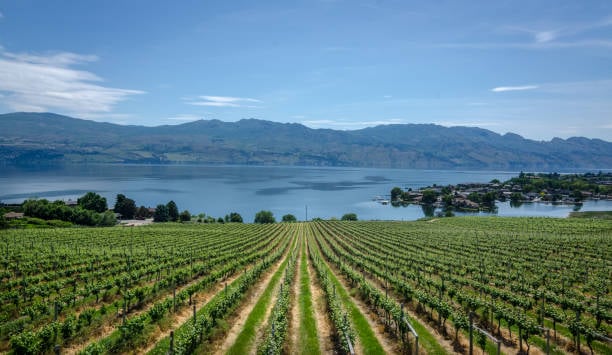
Why the ALR Matters When Living in Kelowna
A big part of Living in Kelowna is enjoying the mix of lake, mountains, farms, and neighbourhoods. The ALR helps protect that farming land.
The Agricultural Land Commission says the ALR is a provincial land-use zone where agriculture is the priority use. It also notes that the ALR makes up about 5% of B.C.’s total land base, and that this land has some of the province’s best agricultural capacity.
That matters in Kelowna because farmland is not just empty land waiting to be developed.
It is part of the food system, the views, the local economy, and the Okanagan lifestyle.
What Is the Agricultural Land Reserve?
The Agricultural Land Reserve is land set aside mainly for farming.
In simple terms, the ALR says:
Agriculture comes first.
That does not mean nothing else can happen on the land. It means non-farm uses, extra homes, subdivision, fill, soil removal, and certain business uses may be limited or need approval.
The City of Kelowna explains that agriculture is the priority use in the ALR, while non-agricultural uses and subdivisions are restricted unless approved by the Agricultural Land Commission.
Agriculture Is the Priority Use
Farm use includes things like farming land, plants, mushrooms, truffles, or animals, as well as farm operations under B.C.’s farm legislation.
That can include:
- Orchards
- Vineyards
- Livestock
- Greenhouses
- Forage crops
- Nursery crops
- Mushrooms
- Cannabis production where permitted
Why Buyers Should Care
For buyers looking at Kelowna homes for sale on larger lots or acreages, the ALR can affect what you can do after closing.
You may need to ask:
- Can I build another home?
- Can I run a business here?
- Can I rent part of the property?
- Can I host events?
- Can I remove soil or add fill?
- Can I subdivide later?
These are not small questions. They can change the value and use of the property.
Common Farm Uses in the ALR
Many normal farming and ranching activities are allowed in the ALR.
Traditional Farming and Ranching
Common uses include crops, livestock, greenhouses, tree fruits, nuts, vegetables, berries, grains, oil seeds, and forage crops.
In the Okanagan, this is why you see so many:
- Apple orchards
- Cherry orchards
- Vineyards
- Hay fields
- Hobby farms
- Equestrian properties
Farm Product Storage, Packing, and Processing
Some farm-related businesses may also be allowed, especially when they are tied to products grown on the land.
For example, the ALR Use Regulation includes rules around storing, packing, preparing, and processing farm products. In some cases, at least 50% of the farm product must be produced on that agricultural land or through an association connected to the owner.
Why This Matters for Kelowna Acreage Buyers
If you are Living in Kelowna and looking at an acreage with a packing building, fruit stand, cooler, or farm shop, you want to know if that use is legal, existing, permitted, or just assumed.
Never guess.
Permitted Farm Uses in the ALR
The ALC lists several permitted farm uses that are directly tied to agriculture.
Wineries, Cideries, and Alcohol Production
This is a big one for the Okanagan.
Wineries and cideries may be permitted in the ALR, but they are subject to rules. The regulation includes requirements around primary farm products and, in many cases, whether at least 50% of the product used is harvested from the agricultural land or tied to B.C. farm operations under contract.
That is why buying land for a future winery is very different from buying a normal residential lot.
Farm Retail Sales
Farm retail sales may be allowed, but there can be size and product rules. The regulation says retail sales may be permitted where all products are produced on the agricultural land, or where the retail area meets certain conditions, including a 300 m² limit and product-source requirements.
Agri-Tourism Activities
Agri-tourism can include farm tours, educational activities, harvest festivals, tractor rides, petting zoos, dog trials, and corn mazes, depending on the property and conditions. The regulation says agri-tourism activities must be on land classified as a farm, open to the public, and not involve permanent facilities for the activity.
📥 Download our free Kelowna Home Buyer’s Guide here
Permitted Non-Farm Uses in the ALR
Not every permitted use in the ALR is a farm use.
Some uses are considered permitted non-farm uses. These may be compatible with agriculture and lower impact, but they still come with rules.
The ALC says some permitted non-farm uses can be prohibited by local or First Nation governments, and many are subject to conditions, limits, or thresholds.
Home-Based Business
A home-based business may be possible, but it depends on the type of use, building size, zoning, and local rules.
Under the ALR Use Regulation, home occupation use may be permitted if the structure is accessory to and on the same parcel as the residence, and the structure size meets local government rules or, if none apply, does not exceed 100 m².
Events on ALR Land
Events can be tricky.
The regulation allows certain gatherings for events if the land is farm-classified, no permanent facilities are built, parking does not interfere with farm productivity, attendance is limited, the event is under 24 hours, and no more than 10 such gatherings happen in a calendar year.
So, if you are dreaming of buying an acreage and hosting weddings every weekend, you need to slow down and check the rules first.
Pet Kennels, Breeding, and Animal Uses
Pet breeding and boarding may be permitted but may also be prohibited by local government rules.
This is a good example of why Living in Kelowna on rural land requires checking both the ALC rules and the local zoning rules.
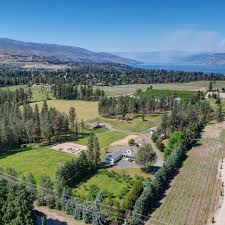
Residential Rules on ALR Properties
This is where many buyers get confused.
Just because a property is large does not mean you can build several homes on it.
Secondary Suites and Extra Dwellings
The ALR Use Regulation permits one secondary suite if it is located in the principal residence.
In Kelowna, the City says the number, size, and siting of dwellings in agricultural areas is restricted. For A1 agricultural properties, one dwelling of 500 m² or less is permitted, and larger properties of 2.0 hectares or more may allow a second dwelling unit up to 90 m², depending on the situation.
Tourist Accommodation
Tourist accommodation may be allowed in a principal residence, but the regulation limits tourist accommodation to 4 bedrooms in total and short-term use only.
This matters for buyers looking at short-term rental income, bed and breakfast ideas, or rural lifestyle properties.
Local Kelowna Rules Still Matter
One of the biggest mistakes buyers make is thinking ALC permission is the only issue.
It is not.
The City of Kelowna states that the ALR takes precedence over, but does not replace, other laws and bylaws. If a proposed work or activity is not permitted in the ALR, ALC approval is needed before the City can issue permits.
Check Local Rules in Kelowna, West Kelowna, and Lake Country
If you are comparing properties in Kelowna, West Kelowna, and Lake Country, you need to check the local government rules for each area.
They may handle zoning, buildings, business licences, farm worker housing, setbacks, water, access, and permits differently.
Buyer Due Diligence Checklist
Before buying ALR land, ask:
- Is the property inside the ALR?
- What is the current zoning?
- Is it farm-classified?
- Are all buildings permitted?
- Are there covenants or restrictions?
- Is the use legal or just historic?
- Can I get financing and insurance?
- Are there water rights or irrigation limits?
- Does my intended use need ALC approval?
📩 Subscribe to our weekly email update[Here] for listings and market insights.
Buying ALR Property While Living in Kelowna
For anyone Living in Kelowna, ALR land can be attractive because it often gives you space, views, privacy, and a connection to the rural side of the Okanagan.
But it is not the same as buying a normal subdivision home.
A standard residential buyer may care most about bedrooms, bathrooms, layout, school catchment, and price.
An ALR buyer needs to go deeper.
You are buying a home, but you may also be buying rules, obligations, restrictions, farm potential, business limits, and future uncertainty.
How ALR Land Shapes the Okanagan Lifestyle
Part of Living in Kelowna is enjoying the farms, vineyards, fruit stands, and open land around the city.
The ALR helps protect that feeling.
It also helps explain why growth in Kelowna often pushes into townhomes, condos, infill housing, and higher-density neighbourhoods instead of endless sprawl.
That can be frustrating for some buyers who want more land, but it also protects part of what makes the Okanagan lifestyle special.
What Sellers Should Know About ALR Properties
If you are selling an ALR property, the marketing needs to be clear.
Buyers will want to know what they can do with the land.
Strong marketing should explain:
- Current zoning
- ALR status
- Existing uses
- Farm classification
- Home and building details
- Irrigation and water information
- Potential buyer types
- Known limits and opportunities
This is where Kelowna real estate marketing needs to be more than pretty photos. Buyers need confidence.
Final Thoughts: Living in Kelowna and Buying ALR Land
Living in Kelowna gives you access to one of the most unique real estate markets in Canada.
You can choose downtown condos, lakeview homes, family neighbourhoods, rural acreages, orchards, vineyards, and everything in between.
But when ALR land is involved, the rules matter.
The right property can be an amazing fit. The wrong assumptions can create expensive problems.
If you are moving to Kelowna, buying rural property, comparing Kelowna homes for sale, or trying to understand what your ALR property may be worth, it helps to have local guidance before making a decision.
For help buying or selling ALR, acreage, farm, or residential property in Kelowna and the Okanagan, reach out to Mark & Maddie.
Mark Coons Personal Real Estate Corporation, BBA, CE
Team Lead, Selling Okanagan Group | eXp Realty Kelowna
Phone: 778-946-6454
Email: [email protected]