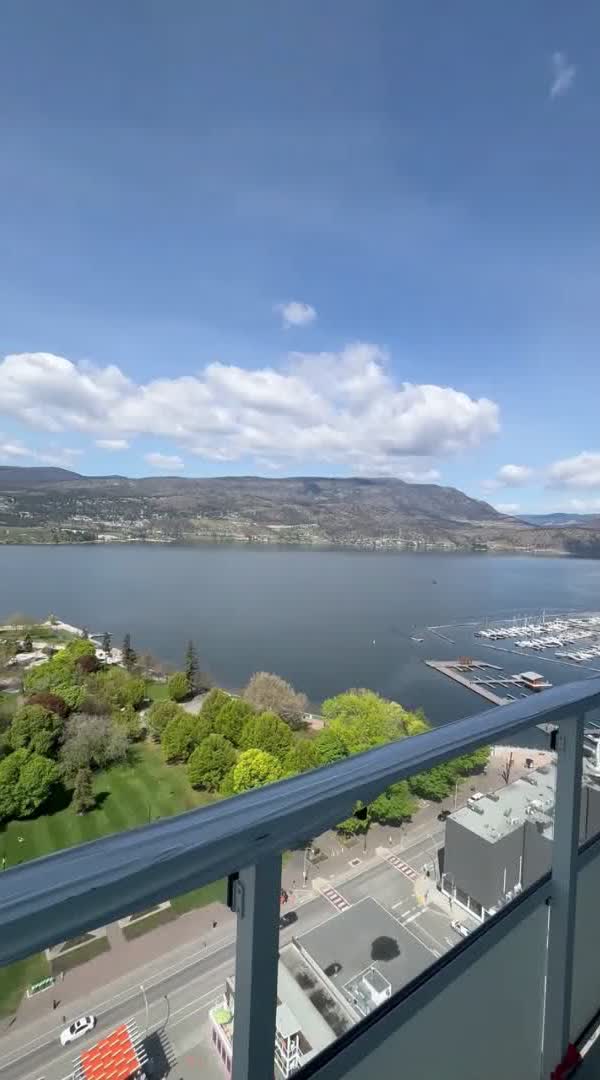
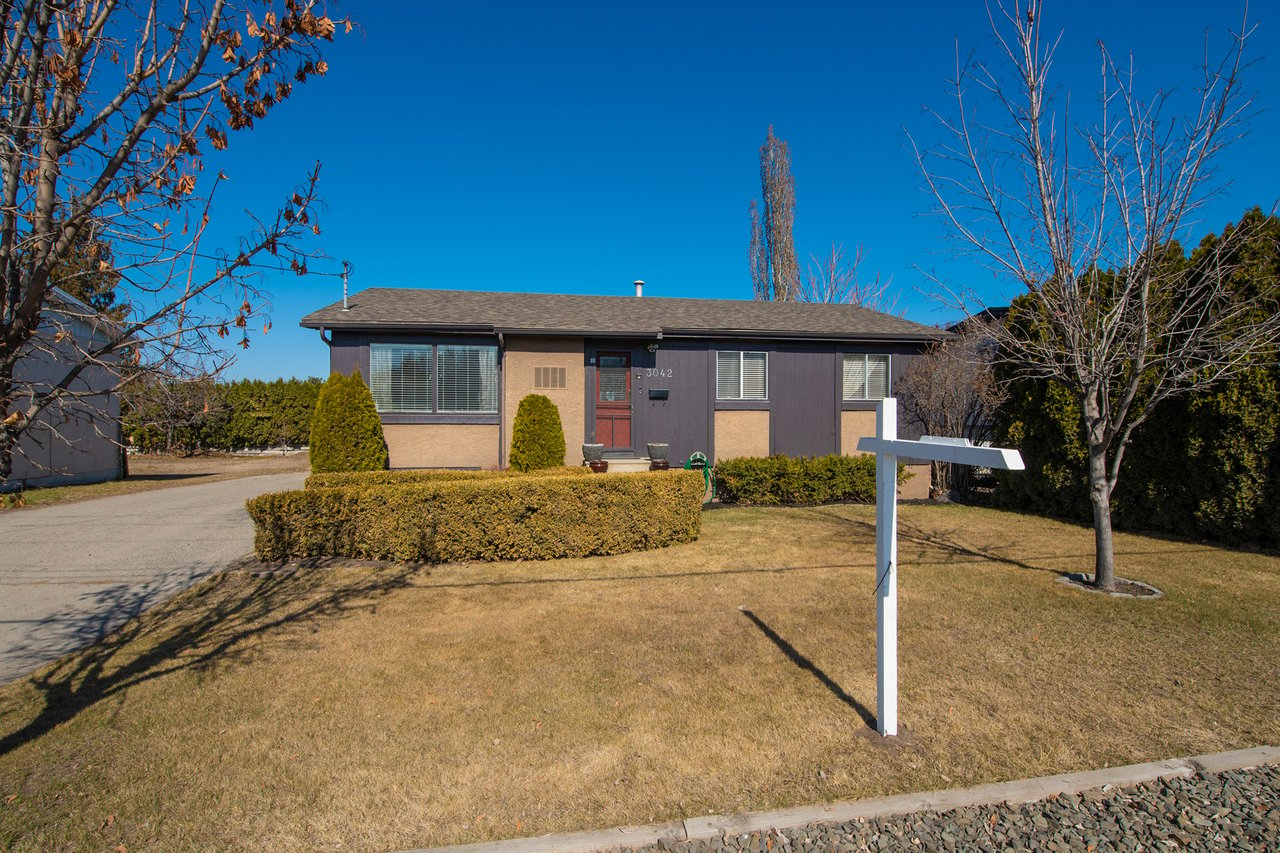
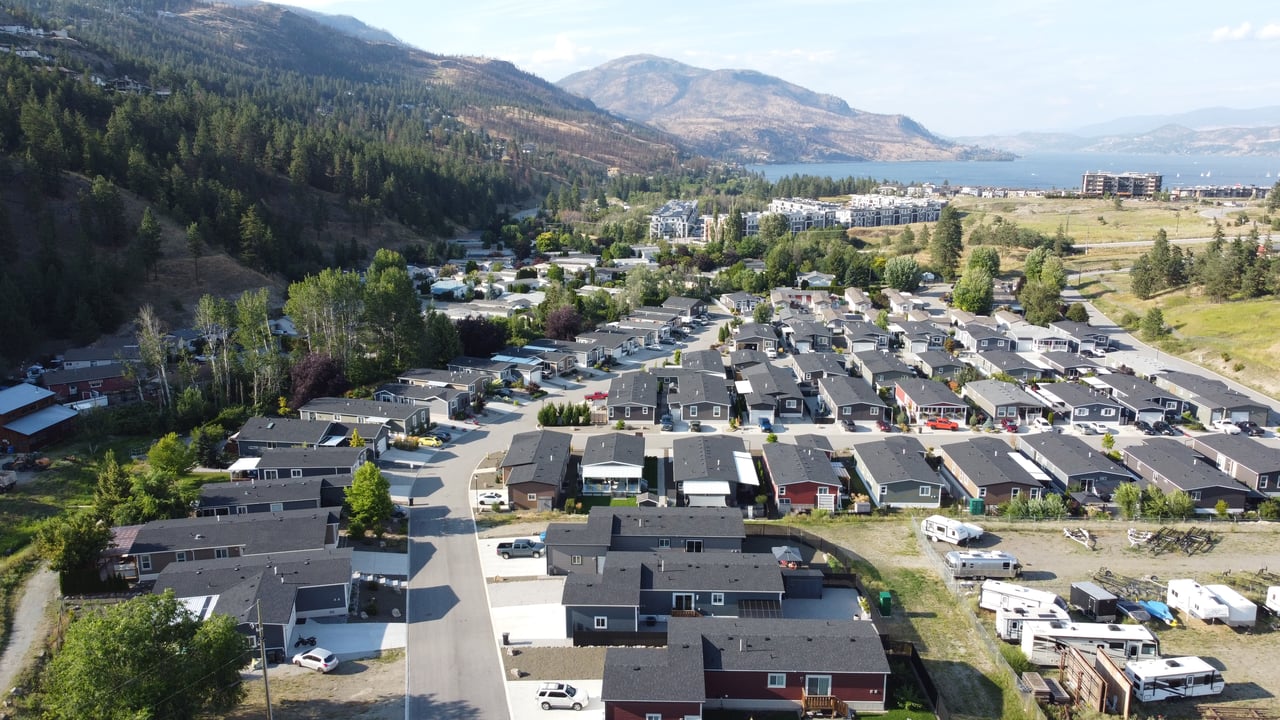
There were 2,734 residential properties for sale across the Central Okanagan at the end of October 2026.
That's a lot of choice.
So why are some buyers still having trouble finding the right home?
I think we're seeing something interesting in the Kelowna real estate market. It's not just about how many homes are available. It's about what kind of homes are available, where they're located, and what buyers actually want.
And with new housing construction slowing in Kelowna, this becomes an even more important question heading into 2027.
Want this kind of breakdown every Wednesday?
I send a short weekly email on what's actually happening in the Kelowna and Okanagan market: real numbers, neighbourhood trends and what they mean for buyers and sellers. No fluff.
What Happened in the Kelowna Real Estate Market in October 2026?
According to the Association of Interior REALTORS® (AIR), the Central Okanagan recorded:
- 290 residential sales, down 17.1% compared with October 2025.
- 2,734 active residential listings, down 9.5% year over year.
Benchmark prices also moved in different directions.
Property Type | October 2026 Benchmark Price | Year-over-Year Change |
|---|---|---|
Single-family homes | $1,003,100 | -2.2% |
Townhomes | $727,400 | +3.2% |
Condos | $465,100 | -3.8% |
At first glance, you might conclude that the market is relatively flat, with some property types performing better than others.
But those regional figures don't tell the whole story.
A detached home in Glenrosa isn't competing with a luxury waterfront property in Lower Mission.
And a buyer looking for a rancher isn't necessarily interested in a three-storey townhouse.
Same region. Different markets.
Some Kelowna and West Kelowna Neighbourhoods Are Still Seeing Price Increases
I went through AIR's Q3 2026 Okanagan Market Report, particularly the neighbourhood statistics on pages 6 and 7.
The September 2026 single-family benchmark figures showed some interesting differences compared with September 2025.
Neighbourhood | Benchmark Price | Annual Change |
|---|---|---|
Glenrosa | $821,100 | +6.9% |
Shannon Lake | $1,009,800 | +6.4% |
West Kelowna Estates | $1,005,700 | +5.7% |
Peachland | $971,900 | +5.6% |
Lakeview Heights | $1,166,000 | +5.2% |
Lower Mission | $1,268,600 | +4.3% |
Rutland South | $805,300 | +3.9% |
Springfield/Spall | $686,600 | -5.0% |
These figures are from September, rather than the October regional statistics above.
What's interesting is the difference between neighbourhoods.
Glenrosa showed a 6.9% annual increase in its single-family benchmark, while Springfield/Spall showed a 5% decline.
That doesn't mean every Glenrosa home gained 6.9% in value, or that every home in Springfield/Spall lost 5%.
A benchmark price represents a modelled typical property. It isn't an appraisal of an individual home.
But it does show why I don't like relying on one regional number to explain what's happening everywhere.
If you're thinking about selling, the Central Okanagan average matters far less than the comparable homes buyers are considering in your neighbourhood.
Why Average Home Prices Can Be Misleading
One thing I regularly remind people is that real estate statistics are only as useful as the properties behind them.
Imagine that one month, more expensive homes sell than usual.
The average sale price could increase even if the value of comparable homes hasn't changed.
The opposite can happen when more entry-priced properties sell.
This is why I like comparing several measurements:
- Benchmark prices for a more consistent view of typical property values.
- Actual comparable sales to understand what buyers are paying.
- Months of inventory to understand supply relative to sales.
- Quarterly trends to help smooth out some of the monthly changes.
None of these measurements is perfect.
Together, they can give us a much clearer picture.
Not All Housing Inventory Is Created Equal
This is where the market becomes particularly interesting.
Our Selling Okanagan Group MLS analysis covering April through September 2026 found substantial differences in months of supply.
Housing Segment | Approximate Months of Supply |
|---|---|
Single-family homes under $900,000 | 4–5 months |
Newer townhomes built since 2023 | 13–14 months |
Single-family homes over $2.5 million | 19 months |
These figures come from our MLS analysis of the April–September 2026 period. They are segment-specific estimates, not current October inventory figures.
Months of supply estimates how long the available inventory would take to sell at the observed sales pace, assuming no new listings were added.
The difference between these segments is significant.
Someone shopping for a detached home under $900,000 may face a very different level of competition than someone purchasing a luxury property over $2.5 million.
And the newer townhouse market may offer buyers more time and negotiating options than other parts of the market.
That doesn't mean every newer townhouse is overpriced, or every entry-priced detached home will sell quickly.
Location, condition, layout and pricing still matter.
But it helps explain something I keep coming back to.
Having plenty of homes for sale doesn't automatically mean buyers have plenty of suitable choices.
Kelowna Housing Starts Are Down 32%. What Does That Mean?
On November 17, BCREA released its latest Canadian Housing Starts update.
One number stood out.
Kelowna housing starts were down 32% year to date compared with the same period in 2025.
Meanwhile, housing starts across British Columbia were 34% higher in October than in October 2025.
Those figures measure different periods, so they shouldn't be treated as a direct like-for-like comparison.
Still, they raise an important question.
If Kelowna is starting fewer homes, are we heading toward another housing shortage?
Possibly in certain segments over time. But the answer isn't that simple.
A housing start is the beginning of construction, not the completion of a home.
Projects already underway can continue adding housing even when fewer new projects are starting.
According to AIR's Q3 2026 report, approximately 4,327 apartment units were under construction across the wider Okanagan as of Q2 2026.
Those units aren't necessarily all condos for sale. The total can include rental apartment projects, and the figure covers a wider region than Kelowna alone.
That distinction matters.
New purpose-built rental homes could increase choices for tenants. Completed condo projects could add resale or new-home competition. The effect depends on the type of housing being completed and when it becomes available.
We can have construction slowing today while homes from earlier projects are still entering the market.
And if fewer projects are started now, the effects on future supply may take years to appear.
Could the Kelowna Condo Market Face More Competition?
It's something I'm watching.
Condo buyers and investors have different priorities from families searching for detached homes.
Some buyers care most about monthly carrying costs. Others are comparing rental income, strata fees, building age, location and future resale potential.
When new apartments are completed, they may affect the market differently depending on whether they're rental homes, newly built condos or units that eventually enter the resale market.
For someone buying a condo today, I'd want to understand:
- How many comparable units are currently listed in the building and nearby developments?
- What have similar units actually sold for?
- Are additional competing projects nearing completion?
- How do strata fees and other monthly costs compare?
- What is the property's realistic rental potential, if that's part of the purchase plan?
The broader housing-starts number doesn't answer those questions.
Building-level and neighbourhood-level research does.
I track these numbers every week so you don't have to.
Join the Wednesday market email and get neighbourhood-level stats, supply trends and my take on what's coming next for the Okanagan, straight to your inbox.
Sign Up for the Weekly Email →
What Is the Forecast for BC Real Estate in 2027?
BCREA's November 10 Fourth Quarter Housing Forecast projects residential sales across British Columbia will increase by 7.2% in 2027, following an expected decline of 4.5% in 2026.
That points toward a potential recovery in transaction activity.
But more sales don't automatically mean every property type will experience rising prices.
And this is a provincial forecast, not a guarantee of what will happen in Kelowna.
My expectation is that different parts of the Okanagan housing market will continue moving at different speeds.
Entry-priced detached homes, luxury properties, condos, ranchers and newer townhomes may each respond differently to changes in interest rates, affordability and buyer demand.
There's another factor worth watching.
British Columbia's small-scale multi-unit housing rules have changed what can be built on many residential properties. Further policy changes remain possible, and the effects will depend on local zoning, development costs and what builders can realistically deliver.
These rules could change future housing competition, but they don't prove why any particular neighbourhood's prices have moved.
What Should Kelowna Buyers Be Watching?
If you're planning to buy, don't rely entirely on the regional average.
Look at the specific type of home you want.
For example, if you're searching for a detached home in West Kelowna under $900,000, you should be looking at recent sales, competing listings and how quickly comparable homes are selling in that price range.
The same approach applies if you're looking at condos in downtown Kelowna or townhomes in Lake Country.
A market with plenty of overall inventory can still have limited choices for your particular needs.
What Should Kelowna Sellers Be Watching?
If you're selling, I think one of the most important questions is:
What can a buyer purchase instead of your home?
That's your real competition.
Look at the location, condition, layout and asking prices of competing properties.
Then look at what has actually sold.
A homeowner might see headlines saying prices are down across the Central Okanagan, but their neighbourhood or property type could be performing differently.
The reverse can also be true.
A strong regional benchmark doesn't guarantee a home will sell at the price the owner wants.
The market ultimately comes down to what buyers are willing to pay for the available alternatives.
Why Downsizers Need to Watch Two Different Markets
This is particularly important for anyone thinking about downsizing.
You might be selling a larger detached home and purchasing a rancher, townhouse or condo.
Those are two separate markets.
The market for the home you're selling may have fewer competing properties and stronger demand.
The home you're hoping to purchase might be in a segment with more inventory and greater negotiating flexibility.
Or it could be the opposite.
That's why I like comparing both sides before someone makes a decision.
It's not just about what your home is worth.
It's about what you'll receive from the sale, what your next home will cost, and whether the move improves your lifestyle or financial position.
Sometimes waiting makes sense.
Sometimes moving sooner creates an opportunity.
It depends on the properties and your personal situation.
My Takeaway: Same Valley, Different Markets
I don't think the biggest question heading into 2027 is simply whether home sales recover.
It's which types of homes will benefit most if they do.
More homes for sale doesn't always mean more choices for every buyer.
Fewer homes being built doesn't automatically mean prices will rise.
And stronger sales activity doesn't guarantee that every neighbourhood will improve at the same pace.
It still comes back to supply and demand.
But we need to look at the right supply and the right demand.
If you're curious about how your neighbourhood is performing, or you're considering selling one type of home and buying another, feel free to reach out.
Even if moving is just something you've been tossing around, I'm happy to take a closer look at the numbers with you.
No obligation.
Stay ahead of the Okanagan market.
Every Wednesday I send one short email with the numbers that matter: sales, supply, neighbourhood trends and what I'm seeing on the ground. Free, and you can unsubscribe anytime.
Join the Weekly Market Email →
Mark Coons PREC*, BBA, CE
Team Lead, Selling Okanagan Group | eXp Realty Kelowna
778-946-6454
[email protected]
Sources
- Association of Interior REALTORS®: October 2026 residential market statistics.
- Association of Interior REALTORS®: Q3 2026 Okanagan Market Report (neighbourhood benchmark statistics, pages 6–7, and housing construction data).
- BCREA: Canadian Housing Starts, November 17, 2026.
- BCREA: Fourth Quarter Housing Forecast, November 10, 2026.
- Selling Okanagan Group: MLS market-segment analysis, April–September 2026.