The Future of Real Estate: What a Decade of Building Tells Us About What’s Coming Next
A Thought Piece on Kelowna’s Housing Evolution, 2015–2030
Real estate is full of clichés: “They’re not making any more land.” “What goes up must come down.” “The best time to buy was yesterday.”
But if the last ten years in Kelowna have shown us anything, it’s that those old sayings only tell part of the story.
The deeper truth is this: we are not just building homes — we are building the future structure of our city’s economy and community.
And what we’ve built over the last decade says a lot about what kind of future we’re headed toward.
A Decade of Change
Let’s rewind to 2015.
Kelowna was already on the rise — population growing, the skyline slowly adding height, but still rooted in its small-city character.
Back then, single-family homes were still the backbone of housing starts. Apartments were gaining traction, but detached construction accounted for roughly half of all new builds.
Fast forward to 2025, and the picture is unrecognizable.
The data from CMHC and the City of Kelowna shows an undeniable trend:
-
Single-family construction has steadily declined for a decade.
-
Multi-family housing — especially apartments and rentals — now dominates the landscape.
-
Townhomes, while often discussed as the “missing middle,” remain a small portion of total new housing.
Even the City’s own permit data paints the picture clearly: in 2015, we were still building subdivisions. In 2025, we’re building skylines.
Building More — But Owning Less
At first glance, that might seem like progress. More housing should mean more affordability, right?
But the outcome hasn’t matched the theory.
Over the last ten years, Kelowna has approved thousands of new units. Yet average home prices have climbed faster than income growth, and affordability has worsened.
Why? Aside from the once a century events that happened in 2020 but my take is because the type of housing we’re building doesn’t align with the type of demand driving the market.
Much of the new supply is rental-only.
Projects like the Capri Mall redevelopment at 1200-block Pacific Avenue — approved by council in October 2025 — tell the story well.
A 20-storey, 157-unit rental tower, expanded to include five extra storeys and 76 additional units after being converted from mixed ownership to rental-only.
From a planning and developer standpoint, I get it.
With high borrowing costs and the current policy structure, purpose-built rentals are the only financially viable projects.
But from a market balance perspective, this shift matters — because these units will never hit the resale market.
They add supply, but not ownership supply.
So yes, we’re building more homes.
But we’re also building away from ownership.
How We Got Here
Three key forces created this structural shift in housing:
1️⃣ Policy-Led Density
Policies like B.C.’s Bill 44 (2024) and the federal Build Canada Homes initiative push for rapid densification.
At the same time, CMHC’s MLI Select program has made rental housing easier to finance than for-sale condos or townhomes.
From a government perspective, it’s about solving the housing crisis.
From a market perspective, it’s changing the DNA of new development.
We’re building higher, faster, and more rental-oriented than ever before — but not necessarily more affordable.
2️⃣ Economic Pressure
It’s no secret that construction costs have skyrocketed.
Land prices, material inflation, and borrowing costs have squeezed developer margins.
The easiest way to make a project work?
Add more floors, more density, and more units — usually in the form of rentals.
The result is a city that’s growing upward, but not necessarily outward — or broadly accessible to buyers.
3️⃣ Cultural and Demographic Shifts
Population growth has been relentless.
Kelowna’s population is up roughly 20% in the last decade, driven by migration from larger cities, international arrivals, and young families chasing lifestyle and opportunity.
But high rates, high prices, and limited ownership supply have forced many of those same families to stay in the rental market longer.
The dream hasn’t died — it’s just been delayed.
The Pattern: A Market of Extremes
If you look at Kelowna’s housing data over time, the pattern is clear.
In 2015, we had a relatively balanced mix of single-family and multi-family permits.
By 2020, apartments accounted for the majority of new builds.
By 2025, multi-family construction made up a high proportion of total housing activity — while single-detached permits represented only a small fraction.
This shift has created what I call a “barbell market.”
On one end: high-end detached homes, scarce and expensive.
On the other: a flood of small apartments and rentals.
In the middle — the space families actually need — there’s not enough being built.
That’s why townhomes are quietly becoming one of the most important housing types in Kelowna’s future.
Townhomes: The New Middle Ground
Townhomes are the missing middle — and the most logical next step for anyone priced out of detached homes but unwilling to settle for apartment living.
They offer:
-
A private entrance
-
Modest outdoor space
-
Manageable maintenance
-
And, crucially, ownership
Yet, despite all the talk, townhomes remain a minor share of new builds.
Developers struggle to make them work financially because of land costs, fees, and the relative lack of policy support compared to large-scale rental projects.
But this is where the opportunity lies — for both policy and buyers.
If we could redirect just a portion of today’s incentives toward small-scale, ground-oriented ownership projects, we could start rebuilding the bridge between renting and owning.
What Comes Next (2026–2030)
No one can predict the market perfectly — but directionally, the signals are there.
🔹 Ownership Supply Will Stay Tight
With most active projects being rentals, resale inventory will stay low.
That will support prices for single-family homes and townhomes.
Condos may see more competition, but major price drops are unlikely in the mid to long term— there’s simply too much demand relative to ownership supply.
This is also where the short term rental rules might be continued to be used as a string the government keeps pulling.
🔹 Rents May Ease, Briefly
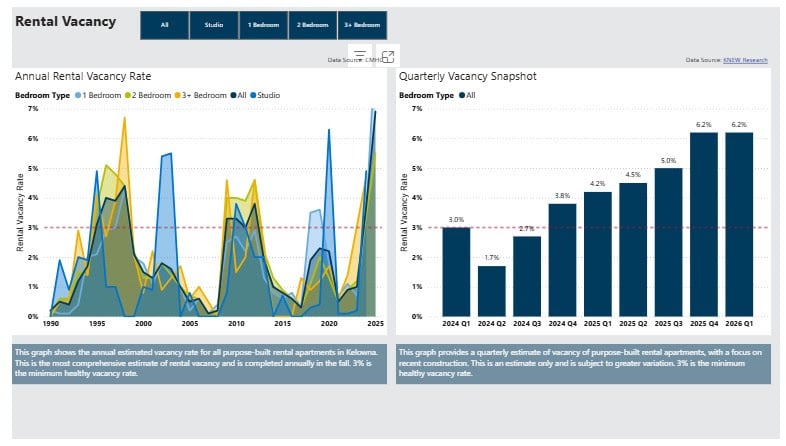
As large projects like Capri Mall complete, we’ll likely see rents soften temporarily.
But once this wave of construction finishes and permit volumes remain low, rents will climb again.
More apartments doesn’t automatically mean affordability — especially when they’re all rentals.
It brings down rents making housing more affordable for renters, but for people with a home ownership dream, its actually making their dream more expensive.
🔹 Institutional Ownership Will Grow
Large investment groups and REITs will dominate the rental market.
That could stabilize professional management and tenant quality, but it also reduces diversity in ownership.
The market becomes more corporate — less local.
🔹 Townhomes Will Outperform in the Middle
I believe the next five years will see townhomes resale outperform most other segments for relative appreciation, depending on how fast and cost effective we can build them.
Not because they’re trendy — but because they’re scarce.
In a city that’s either building towers or preserving detached enclaves, townhomes are the rare middle ground.
A City at a Crossroads
Kelowna has grown up fast.
In a single decade, we’ve transitioned from a regional city to a metropolitan hub, balancing lifestyle with urban ambition.
That growth has brought prosperity, but it’s also introduced risk.
Risk that we build a city that’s dense, expensive, and dominated by rentals — rather than balanced, attainable, and owned by the people who live here.
The question isn’t whether we can build enough housing.
It’s what kind of housing we want to build — and who we want it to be for.
Lessons from the Past Decade
-
More supply doesn’t guarantee affordability.
If the supply is concentrated in one format — like rentals — the ownership market will tighten. -
Policy shapes everything.
Governments at every level now play a larger role in determining housing outcomes than the market itself. -
The missing middle is still missing.
We’ve spent a decade encouraging density, but not enough time encouraging balance. -
Land will always win.
Single-family homes remain the long-term hedge against policy shifts, inflation, and demographic pressure.
Looking Ahead
If history repeats itself — and it often does — 2026 and beyond will test how adaptable we really are.
Detached homes will remain the benchmark for long-term value.
Townhomes will become the strategic entry point for families looking to buy.
Condos will trade more like commodities — stable, but increasingly shaped by the rental market.
And policy — not just economics — will continue to determine what gets built.
The smart move, whether you’re a buyer, builder, or policymaker, is to focus not on how much we’re building, but what kind.
Because the homes we permit today will define who can live here tomorrow.
Mark & Maddie
Selling Kelowna Real Estate Group | eXp Realty Kelowna
📲 Download our MLS® app (Access Code 33DC752D)
📩 Subscribe for weekly insights HERE