Should Kelowna Scrap Development Cost Charges? Why It Matters for Housing Affordability
The $50,000 Question Slowing Down New Housing in Kelowna
Here's a number that doesn't get talked about nearly enough: $50,000. That's roughly how much the City of Kelowna's development cost charges (DCCs) add to the price of every new home built in the city—whether it's a tiny studio condo or a large single-family home. Fifty thousand dollars, on top of already sky-high land costs, construction costs, and other government taxes and fees.
Now a conversation is heating up about whether Kelowna should follow the lead of Burlington, Ontario, which recently eliminated its development cost charges entirely for a two-year period to stimulate construction and make new housing more affordable. It's a bold idea—and one that deserves serious attention from anyone who cares about housing affordability in the Okanagan.
Let's talk about what DCCs are, why they matter, and what scrapping them—even temporarily—could mean for the Kelowna housing market.
What Are Development Cost Charges, and Why Do They Exist?
Development cost charges are fees that municipalities charge developers to help pay for the infrastructure new homes require: roads, sidewalks, water mains, sewer lines, parks, and so on. The idea is reasonable in principle—new development generates new demand for services, so it makes sense that developers contribute to the cost of building out that infrastructure.
The problem is that in places like Kelowna, those charges have grown to levels that are genuinely damaging the economics of new home construction. When you add DCCs to GST, provincial taxes, and other fees and levies, roughly 30% of the cost of any new home in Kelowna is government charges of one kind or another. The Canadian Home Builders' Association's Kelowna branch has been vocal about this, pointing out that governments are essentially "taxing housing like it's a vice—like alcohol or tobacco."
That's not just a catchy line. It reflects a real policy problem. High taxes and fees on new construction don't just raise prices—they reduce the financial viability of new projects, which means fewer projects get built, which means less supply, which means existing homes hold their prices even as demand softens.
The Construction Standstill and Its Consequences
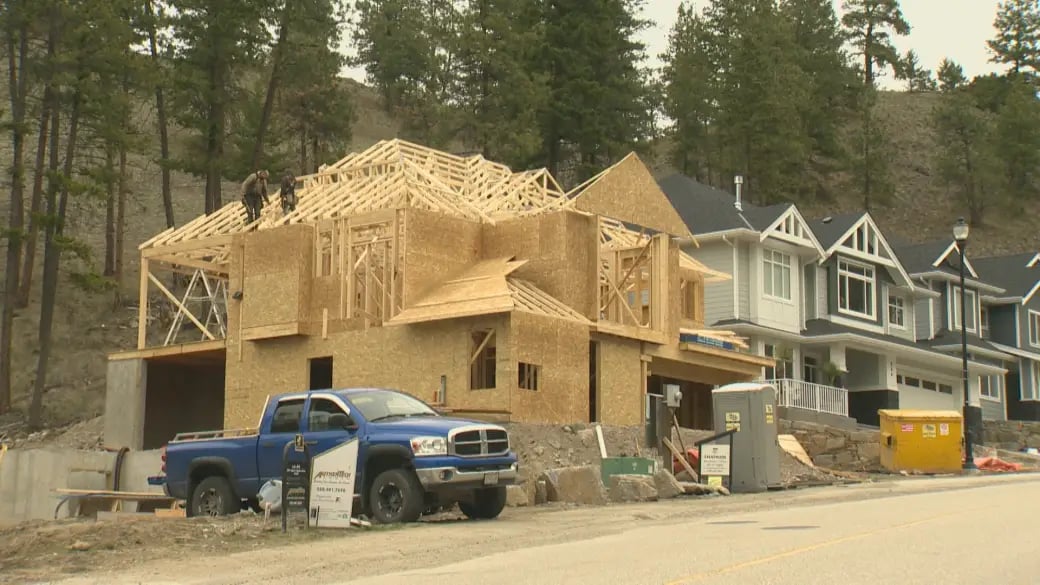
The numbers tell a stark story. New home construction in Kelowna has effectively ground to a halt. Single-family and townhouse starts have cratered. Even condo developers, who had been the most active segment of the market, are pulling back. The CHBA's data shows that housing construction declines have been sharpest in British Columbia and Ontario—the two provinces with the highest development costs and regulatory burdens in the country.
Meanwhile, in Saskatchewan and Manitoba, where rules and costs are more builder-friendly, housing starts have actually increased. This is not a coincidence. It's cause and effect.
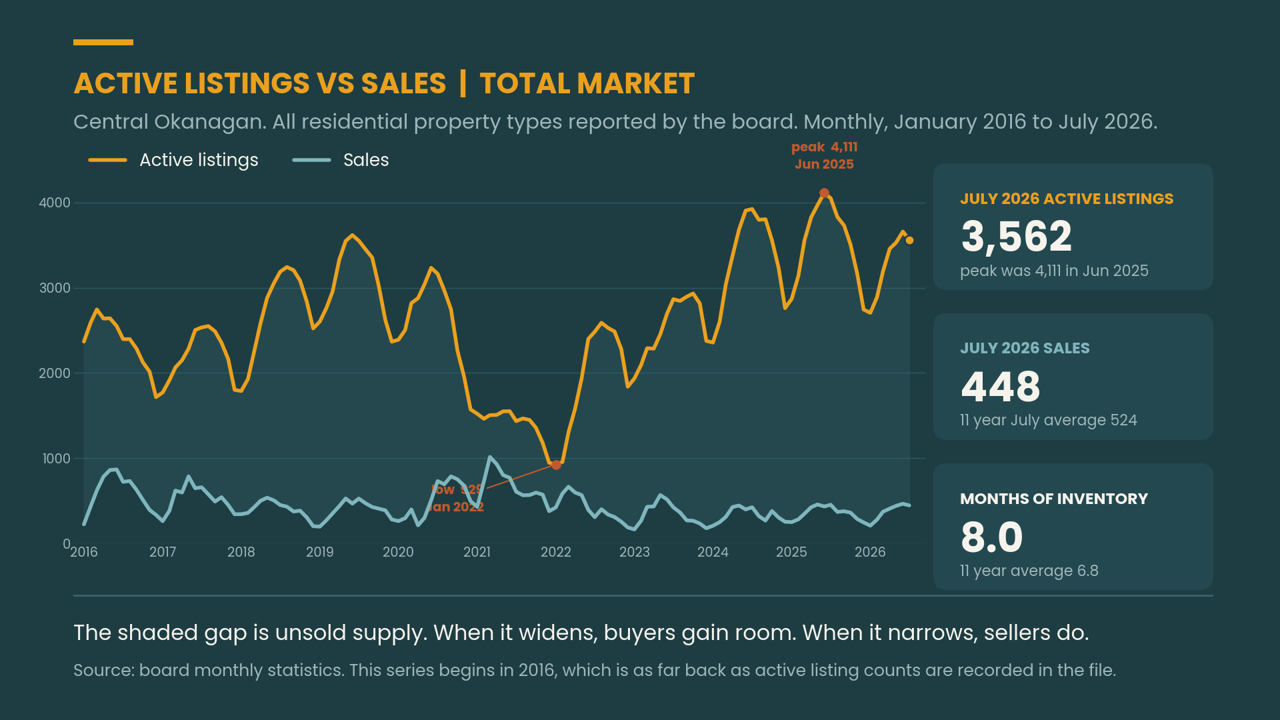
The consequences of this construction standstill ripple through the entire market. When new supply doesn't come online, the pressure on existing homes increases. When developers can't make the numbers work on new projects, the people who wanted to buy a new home have to compete for resale inventory instead. And when housing supply fails to keep pace with long-term population and household growth, affordability erodes for everyone—renters and buyers alike.
The Burlington Model: Could It Work in Kelowna?
Burlington's decision to pause DCCs for two years is an experiment worth watching. The theory is straightforward: remove the charges, make the math work for builders, and you'll get more projects started—more homes built, more jobs created, more economic activity, and eventually more supply to bring prices down.
The Kelowna branch of the CHBA has been pushing for something similar, and their executive officer Cassidy deVeer met with BC Infrastructure Minister Bowinn Ma in Victoria to make the case directly. Their ask goes beyond just DCCs—they'd also like to see the federal government eliminate the 5% GST on all new housing. That would be a significant move nationwide, but at the local level, Kelowna has the ability to act on its own DCCs without waiting for senior governments.
Would a DCC holiday work here? It depends on what problem you're trying to solve and what you're willing to trade off. DCCs generate revenue that the city uses for real infrastructure. A two-year pause would mean either cutting back on planned infrastructure spending or finding another funding source. But if the alternative is a continuing construction freeze that leaves Kelowna with a growing housing deficit, the calculus might be worth it.
What This Means If You're Thinking About Buying or Selling
From a practical standpoint, this policy debate is one to follow closely if you're thinking about the Kelowna real estate market. Here's why it matters to you as a buyer or seller:
If DCCs get reduced or paused and construction activity picks up, you can expect more new inventory to come to market in the next two to three years. That's generally good for buyers and somewhat challenging for sellers of resale homes who will face more competition from newly built units. On the other hand, if construction stays suppressed and demand eventually returns—which it will, as interest rates stabilize and population growth continues—existing homeowners in Kelowna's most desirable neighbourhoods could see renewed price appreciation.
Understanding these dynamics is part of what I help clients work through every day. Whether you're a first-time buyer trying to figure out if a new build makes sense, an investor evaluating a rental property purchase, or a homeowner thinking about timing a sale, the policy environment around housing supply directly affects your decisions. This is one of the most consequential planning and zoning conversations happening in Kelowna right now, and it deserves your attention.
Have questions about what this means for your home or investment? Call us:
Mark Coons, BBA, CE
REALTOR® | eXp Realty Kelowna
Team Lead, Selling Okanagan Group
Relocated to Kelowna in 2018
📞 778-946-6454
📩 [email protected]